
Courts: All High Courts
Read latest High Court judgments and orders on Income Tax, GST, Customs, Company Law and other taxation, corporate, commercial and regulatory matters.

AO Cannot Start Reassessment Scrutiny Before Deciding Objections: Bombay HC

Telangana HC Allows GST Appeal Against Section 73 Adjudication Order

Telangana HC Allows GST Appeal Raising DIN and Digital Signature Grounds
Telangana HC Allows Revocation Application for Cancelled GST Registration

Delhi HC Upholds Reopening of Zoom Insurance Brokers for AY 2020-21
Four-Day Delay Cannot Defeat GST Appeal: Telangana High Court
Telangana HC Grants Two Weeks to File GST Appeal with Delay Condonation Application
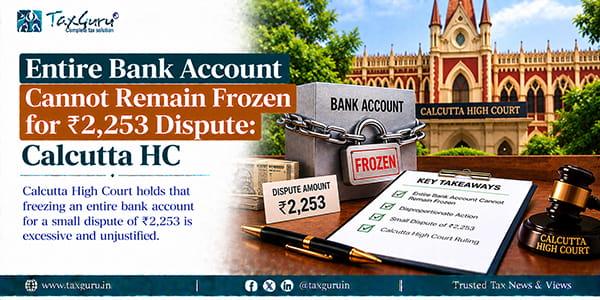
Entire Bank Account Cannot Remain Frozen for ₹2,253 Dispute: Calcutta HC
Forged Director Appointment Allegations Require Trial: Telangana HC Refuses Quashing

Infosys and Infosys BPO Excluded as TP Comparables: Karnataka HC

Revenue Fails to Prove Perversity in Transfer Pricing Comparables: Karnataka HC
Product Replacement Services Merit TNMM Over RPM: Karnataka HC
₹200 Crore Turnover Filter for TP Comparables Valid: Karnataka HC
Single-Year Loss Cannot Justify Exclusion of TP Comparable: Karnataka HC
All High Courts brings together judgments and orders of High Courts across India published on TaxGuru. The archive covers Income Tax, GST, Customs, Company Law, Corporate Law, insolvency, commercial laws and other taxation and regulatory matters. Readers can research important questions of law, constitutional challenges, writ petitions, statutory appeals and other proceedings decided by different High Courts. Chartered Accountants, advocates, tax professionals, businesses and legal researchers can use this consolidated archive to follow High Court jurisprudence across India. Separate High Court categories are available for court-specific judgments and orders.

