Why Company Registration is required in India?
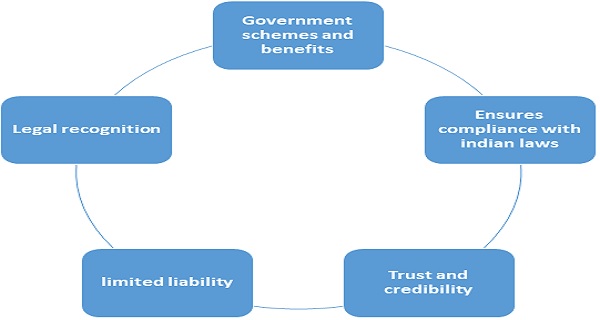
In India, there are multiple schemes provided by the government to promote and support Startup companies in accordance with the laws prevailing in the country. These initiatives aim to encourage entrepreneurship, simplify business formalities, and improve the ease of doing business. To avail the benefits of such schemes, it is mandatory for a business to be legally registered.
What is Company Registration?
Meaning under the Companies Act, 2013
Under the Companies Act, 2013, company registration is the legal process by which a business is registered with the Registrar of Companies (ROC) and is formally recognized by the Government of India as a company. Upon registration, the company comes into existence as a separate legal entity, distinct from its owners and members.
Why Company Registration is Important:
REGISTRATION OF COMPANIES IN INDIA (FINANCIAL YEAR 2024-2025):
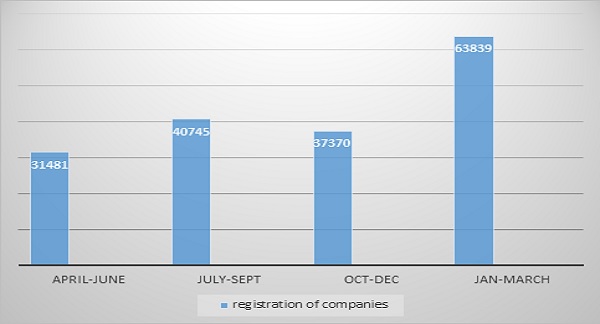
Company registrations show a clear upward trend across FY 2024–25, indicating steadily rising business activity. After gradual growth in the middle quarters, the January–March period recorded a sharp surge, nearly doubling compared to the start of the year. This highlights strong business confidence and an expanding entrepreneurial environment in India.
TYPES OF COMPANIES:
Types of Companies Whose Registration is Required in India
Under the Companies Act, 2013, any business that wants to operate as a company must be legally registered with the Registrar of Companies (ROC). The Act specifies different types of companies that can be incorporated
Private Limited Company (Pvt. Ltd.)
- Minimum Members: 2
- Maximum Members: 200
- Directors Required: Minimum 2
- Key Features:
- Cannot publicly invite shares
- Limited liability for members
- Who Uses It: Startups, small and medium businesses that want private ownership.
Public Limited Company
- Minimum Members: 7
- Maximum Members: No limit
- Directors Required: Minimum 3
- Key Features:
- Can raise funds from the public
- Must follow stricter compliance
- Who Uses It: Large businesses, companies planning to list on the stock exchange
One Person Company (OPC)
- Minimum Members: 1
- Directors Required: Minimum 1
- Key Features:
- Single owner has full control
- Limited liability protection
- Who Uses It: Individual entrepreneurs who want a corporate structure without partners
Section 8 Company (Non-Profit)
- Minimum Members: 2 for Pvt., 3 for Public
- D1irectors Required: Minimum 2
- Key Features:
- Formed for charitable, social, scientific, or educational purposes
- Profits are reinvested in the company
- Who Uses It: NGOs, charities, research organizations
Other Types of Companies
- Producer Company: For agricultural producers
- Small Company: As defined under Companies Act, 2013 for small capital and turnover.
Pre‑requisites for Company Registration under the Companies Act, 2013:
Before a business can be legally registered as a company in India under the Companies Act, 2013, certain conditions must be fulfilled. These ensure the company is set up correctly and complies with the law.
1. Choosing a Unique Company Name
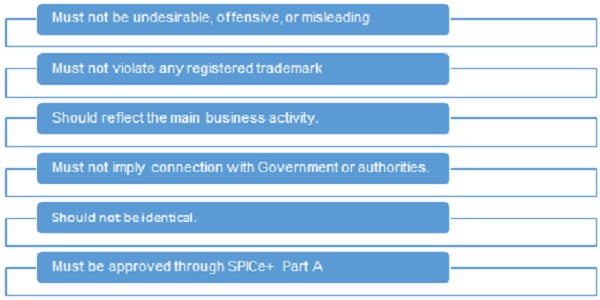
2. Selecting the Type of Company
You must decide what type of company you want to register — like a Private Limited Company Public Limited Company, One Person Company (OPC) or a Section 8 (non‑profit) Company.
3. Defining the Nature and Main Objects of the Company
The Nature of Business and Object of the Company must be clearly stated in the Memorandum of Association. This explains what activities the company will carry out — e.g., manufacturing, services, trading, etc. The name of the company should also be in line with these objects if it indicates the primary business.
4. Digital Signature Certificates (DSC)
Every proposed director of the company must obtain a Digital Signature Certificate (DSC), because all forms for registration (SPICe+ forms) are filed online with the MCA portal.
5. Registered Office Address
Section 12 of the Companies Act, 2013
Every company must have a registered office address in India where all official communications and notices can be received.
6. Object of the Company
The object clause defines the main business activities the company intends to carry out. These objects must be lawful, clearly stated, and mentioned in the Memorandum of Association (MOA).
7. Self-Attestation of Documents
As per MCA Incorporation Rules;
All documents submitted for company registration must be self-attested by the respective applicant. Self-attestation confirms that the documents are true and correct. Incorrect or unsigned documents may lead to rejection of the application.
Documents and Information Required for Company Registration (All Types):
1. PAN Card of all Directors/Shareholders
2. Passport of Directors/Shareholders (for foreign nationals)
3. Aadhaar Card (or Voter ID / Driving License) of all Directors/Shareholders
4. Residential Address Proof (latest utility bill / bank statement)
5. Recent Passport‑Size Photographs of all Directors/Shareholders
6. Digital Signature Certificate (DSC) of all proposed Directors
7. Proof of Registered Office Address
-
- Utility Bill (electricity/telephone/water/gas not older than 2 months)
- Rent/Lease Agreement (if rented)
- Property Ownership Documents (if owned)
8. Draft Memorandum of Association
9. Draft Articles of Association
10. Mobile number and Email of Directors.
11. Form INC‑9 (Declaration by Directors/Subscribers)
12. Form DIR‑2 (Consent of Directors)
Additional Documents for Specific Cases:
1) Nominee’s Identity & Consent (Form INC‑3) (for OPC)
2) Foreign Nationals’ Notarised/Apostilled Identity & Address Proof (for foreign directors)
3) Translation of Foreign Documents in English (certified) (for foreign company filings)
Process of Company Registration:
Documents Received from MCA After Company Registration
- Certificate of Incorporation (COI)
- Corporate Identification Number (CIN)
- PAN of the Company
- TAN of the Company
- Memorandum of Association (MOA)
- Articles of Association (AOA)
- GST Registration Certificate (if applied through SPICe+)
- ESIC Registration (if opted / applicable)
- Director Identification Number
Post‑Incorporation Tasks and Compliance:
- First Board Meeting Within 30 Days
- Appointment of First Auditor
- Opening Company Bank Account
- Deposit of Subscribed Share Capital as per MOA
- Declaration of Commencement of Business (Form INC‑20A)
- GST Registration
- MSME (Udyam) Registration
- Trademark Registration / IPR Filings
- ISO Certification Registration (Optional)
- FEMA Compliance (If Applicable for Foreign Investment)
- Professional Tax Registration
- Shops & Establishment Act Registration
- Payment of Stamp Duty on Share Certificates
REGULAR ANNUAL COMPLIANCE–
- Filing Annual Return (Form MGT‑7)
- Filing Financial Statements (Form AOC‑4)
- DIR‑3 KYC Filing for Directors
CONCLUSION
Company registration under the Companies Act, 2013 gives a business a legal identity, limited liability protection, and enhanced credibility in the market, making it suitable for growth and compliance with Indian law. Registered entities can access formal benefits such as contracts, credit, and continuity of operations.
Key Takeaways
- Separate legal identity and limited liability protection.
- Enhanced business credibility and trust with stakeholders.
- Ability to enter into contracts, own assets, and open bank accounts.
- Continuity of business regardless of member changes.
- Compliance with statutory and regulatory requirements under Indian law.
*****
For professional consultation and assistance in relation to registration of company , connect with Monika Malhotra & Associates via EMAIL: [email protected]