

Articles by this Author
Income Tax
Income Tax
Interest-Free Funds Bar Interest Disallowance; Book Profit Not Cash Credit: ITAT Jaipur
Corporate Law
Corporate Law
Income-Tax Relief Does Not Warrant Writ-Stage Quashing of PMLA Attachment: Chhattisgarh HC
Corporate Law
Corporate Law
NCLAT Upholds Clean Slate Reliefs for Successful Auction Purchaser Under IBC
Income Tax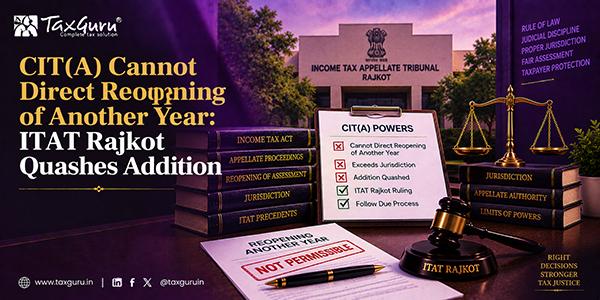
Income Tax
CIT(A) Cannot Direct Reopening of Another Year: ITAT Rajkot Quashes Addition
Corporate Law
Corporate Law
Suppressed RERA Execution Proceedings Defeat Apartment Purchasers’ Writ: Tripura HC
Corporate Law
Corporate Law
Section 138 Complaint Filed Before 15 Days Cannot Sustain Conviction: Karnataka HC
Income Tax
Income Tax
Section 270A Penalty Deleted on Bona Fide Non-Filing Explanation: ITAT Jaipur
Corporate Law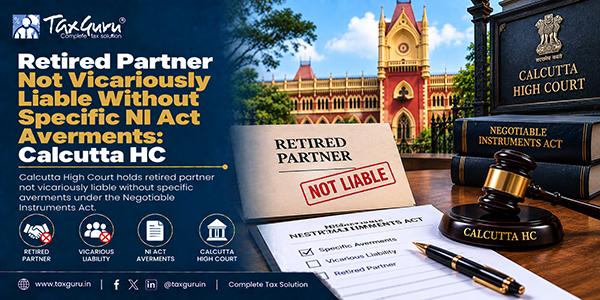
Corporate Law
Retired Partner Not Vicariously Liable Without Specific NI Act Averments: Calcutta HC
Excise Duty
Excise Duty
Cost Audit Shortages Alone Cannot Sustain Time-Barred Excise Demand: Calcutta HC
Custom Duty
Custom Duty
Smuggled Gold Falls Within Prohibited Goods Under Customs Act: Calcutta HC
Income Tax
Income Tax
Revenue’s Assessment Limitation Appeal Dismissed Following Sneh Lata Sawhney: Delhi HC
Income Tax
Income Tax
Section 80HHC Deduction Must Be Computed Independently Before Section 80-IA Restriction: Rajasthan HC
Income Tax
Income Tax
25-Year-Old Reassessment Dispute Remitted to AO for Fact-Finding: Rajasthan HC
Income Tax
Income Tax

