

Articles by this Author
Corporate Law
Corporate Law
SARFAESI Property Dispute Cannot Stall College Affiliation Process: Madras HC
Income Tax
Income Tax
Stock Exchange Penalties for Procedural Lapses Allowable as Business Expenditure: ITAT Mumbai
Income Tax
Income Tax
R&D Building Cost Eligible for Section 35(1)(iv) Deduction: ITAT Mumbai
Income Tax
Income Tax
22-Day Delay in Form 10B Filing Does Not Bar Section 11 Exemption: ITAT Panaji
Goods and Services Tax
Goods and Services Tax
GSTAT Thiruvananthapuram Orders Refund of IGST Paid Twice on Cashew Exports
Company Law
Company Law
NCLAT Reduces Restoration Cost From Rs.10 Lakh to Rs.5 Lakh for Struck-Off Company
Company Law
Company Law
IBC to Companies Act appeal conversion does not reset limitation: NCLAT
Custom Duty
Custom Duty
Madras HC Sets Aside Air and Oil Filter Classification Orders for Ignoring HSN Triple Test
Fema / RBI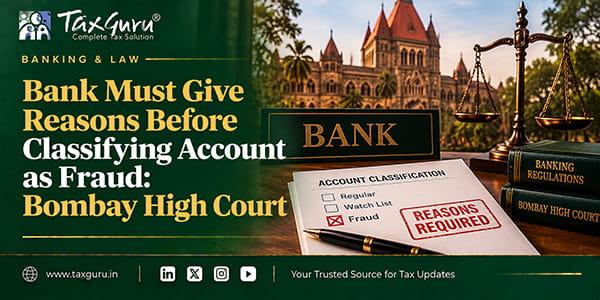
Fema / RBI
Bank Must Give Reasons Before Classifying Account as Fraud: Bombay High Court
Income Tax
Income Tax
Post-Assessment Satisfaction Cannot Sustain Section 271D/271E Penalty: SC
Income Tax
Income Tax
Section 271E Penalty Requires AO Satisfaction in Reassessment Order: Rajasthan HC
Goods and Services Tax
Goods and Services Tax
GST Penalty Writ Challenge Relegated to Appellate Remedy by Delhi HC
Income Tax
Income Tax
Third-Party Search Material Requires Section 153C, Not Section 148: Gujarat HC
Income Tax
Income Tax

