

Articles by this Author
Income Tax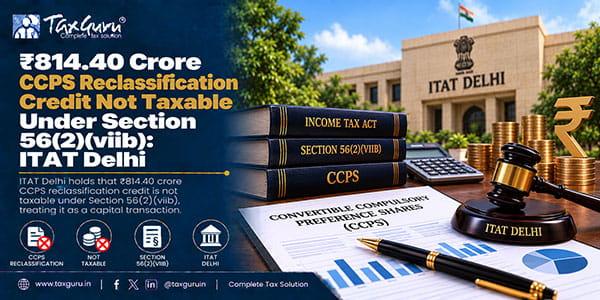
Income Tax
₹814.40 Crore CCPS Reclassification Credit Not Taxable Under Section 56(2)(viib): ITAT Delhi
Income Tax
Income Tax
Section 50C Addition Deleted as Sale Consideration Fixed Before Registration: ITAT Chennai
Income Tax
Income Tax
ITAT Mumbai Deletes 8% Purchase Addition After Purchases Accepted as Genuine
Goods and Services Tax
Goods and Services Tax
₹2 Crore GST Monetary Limit Applies to Pending Appeals: Supreme Court
Service Tax
Service Tax
Pre-July 2010 Residential Construction Service Tax Demand Set Aside: CESTAT Hyderabad
Goods and Services Tax
Goods and Services Tax
GST Rectification Application Must Be Decided Within Eight Weeks: Uttarakhand HC
Income Tax
Income Tax
Mechanical Section 153D Approval Invalidates Search Assessments: ITAT Delhi
Goods and Services Tax
Goods and Services Tax
₹18.22 Crore Fake ITC Case: Punjab & Haryana HC Grants Regular Bail
Goods and Services Tax
Goods and Services Tax
GST Summons Cannot Trigger Section 438 Anticipatory Bail: Supreme Court
Goods and Services Tax
Goods and Services Tax
Section 41A Notice Not Mandatory Before GST Arrest: Telangana HC
Goods and Services Tax
Goods and Services Tax
₹20.28 Crore Fake ITC Case: Rajasthan HC Denies Bail
Custom Duty
Custom Duty
CESTAT Kolkata Deletes ₹10 Lakh Customs Penalty for Lack of Corroborative Evidence
Custom Duty
Custom Duty
Smuggled Gold Paste Is Prohibited Goods; Gujarat HC Upholds Section 112 Penalty
Custom Duty
Custom Duty

