

Articles by this Author
Goods and Services Tax
Goods and Services Tax
GST Time-Barred Appeal Restored for Merits Decision: Himachal Pradesh HC
Goods and Services Tax
Goods and Services Tax
GST Parallel Proceedings Objection Left Open for Statutory Appeal: Allahabad HC
Income Tax
Income Tax
Staffing Company Eligible for Section 80JJAA Deduction on New Employees: ITAT Delhi
Income Tax
Income Tax
₹38.50 Crore Bogus Purchases Cannot Be Entirely Disallowed: Gujarat HC
Income Tax
Income Tax
Earlier Property Booking Cannot Override Stamp Value Without Linked Consideration: ITAT Mumbai
Income Tax
Income Tax
Section 50 Deeming Fiction Cannot Reduce Book Profit Under Section 40(b): ITAT Mumbai
Income Tax
Income Tax
Transfer Pricing Adjustment Alone Cannot Trigger Section 271(1)(c) Penalty: ITAT Ranchi
Income Tax
Income Tax
Voluntary TP Adjustment Eligible for Section 10AA Deduction: ITAT Bangalore
Income Tax
Income Tax
Successor AO Cannot Review Scrutiny Assessment Through Section 147: Chhattisgarh HC
Corporate Law
Corporate Law
Civil Temple Trust Dispute Cannot Be Given Criminal Colour: Karnataka HC
Corporate Law
Corporate Law
MSME Bidder Must Get Opportunity to Match L1 Price: Calcutta HC
Custom Duty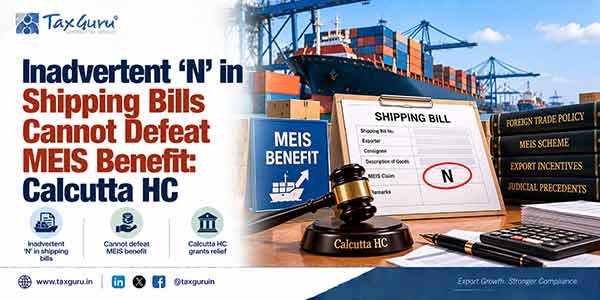
Custom Duty
Inadvertent ‘N’ in Shipping Bills Cannot Defeat MEIS Benefit: Calcutta HC
Corporate Law
Corporate Law
Writ Against District Judge’s Section 37 Arbitration Order Maintainable: Orissa HC
Goods and Services Tax
Goods and Services Tax

