

Articles by this Author
Income Tax
Income Tax
Reassessment Beyond 3 Years Quashed as PCIT Was Wrong Sanctioning Authority: ITAT Mumbai
Income Tax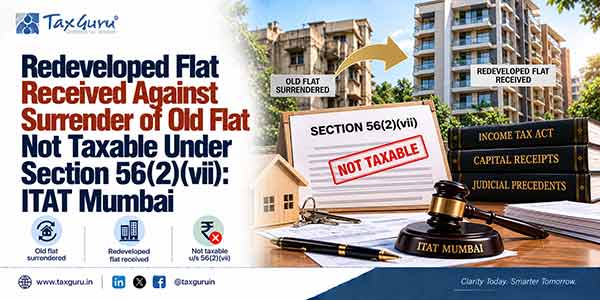
Income Tax
Redeveloped Flat Received Against Surrender of Old Flat Not Taxable Under Section 56(2)(vii): ITAT Mumbai
Service Tax
Service Tax
Extended Limitation Invalid for Retrospective Service Tax on Renting of Property: CESTAT Kolkata
Income Tax
Income Tax
Covid Lockdown Delay in Employees’ PF & ESI Deposit: Section 36(1)(va) Disallowance Deleted by ITAT Delhi
Corporate Law
Corporate Law
Subsequent Larger Bench Judgment Not Ground for Review: Supreme Court
Corporate Law
Corporate Law
Going Concern Buyer Can Seek Reliefs Consistent With E-Auction Terms: NCLAT Delhi
Corporate Law
Corporate Law
Auction Purchaser Not Liable for Pre-Liquidation Sale Property Dues: NCLAT Delhi
Income Tax
Income Tax
Rajasthan HC Stays Section 153C Proceedings Pending Supreme Court Decision
Income Tax
Income Tax
Rajasthan HC Refuses to Interfere With Section 153C Notice in Siddharth Totuka Case
Service Tax
Service Tax
CESTAT Chennai: Builder’s Pre-July 2010 Works Contract Service Tax Demand Quashed
Service Tax
Service Tax
CESTAT Ahmedabad: Delayed Sale Payment Interest Not Taxable as Tolerating Act Service
Corporate Law
Corporate Law
Karnataka HC: Employee Undertaking Validates Deduction of Loans From Gratuity
Income Tax
Income Tax
Gujarat HC: Belated Tax Claim Does Not Bar Section 244A Refund Interest
Corporate Law
Corporate Law

