

Articles by this Author
Income Tax
Income Tax
Spelling Error Can’t Make Eucalyptus Sale Bogus Without Enquiry: ITAT Chandigarh
Income Tax
Income Tax
AO Can’t Assign Imaginary Scrap Value to Obsolete Stock: ITAT Chandigarh
Income Tax
Income Tax
Section 80GGC Deduction Cannot Be Denied for Political Party’s Misconduct: ITAT Rajkot
Income Tax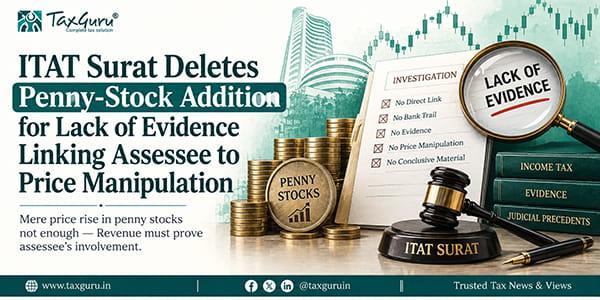
Income Tax
ITAT Surat Deletes Penny-Stock Addition for Lack of Evidence Linking Assessee to Price Manipulation
Income Tax
Income Tax
Family Diary Entry Alone Can’t Prove Unexplained Expenditure: ITAT Ahmedabad
Income Tax
Income Tax
Section 28 Interest Part of Compensation, Eligible for Section 10(37) Exemption: ITAT Rajkot
Income Tax
Income Tax
ITAT Hyderabad Dismisses IL&FS Tax Appeals Due to NCLAT Restraint
Income Tax
Income Tax
ITAT Rajkot Deletes SBI TDS Demand for Foreign-Leg LFC Under HC Order
Income Tax
Income Tax
Section 148 Notice Issued Beyond Two-Day Surviving Limitation Quashed: ITAT Rajkot
Income Tax
Income Tax
ITAT Bars CIT(A) from Dismissing Appeal for Non-Prosecution, Orders Merits Adjudication
Income Tax
Income Tax
ITAT Ahmedabad Grants Section 10(10B) Exemption for BSNL VRS Compensation
Income Tax
Income Tax
BSNL VRS Compensation Exempt Under Section 10(10B); Delayed Claim Allowed
Income Tax
Income Tax
Payment Gateway Charges Not Subject to TDS u/s 194H: Delhi ITAT
Income Tax
Income Tax

