

Articles by this Author
Income Tax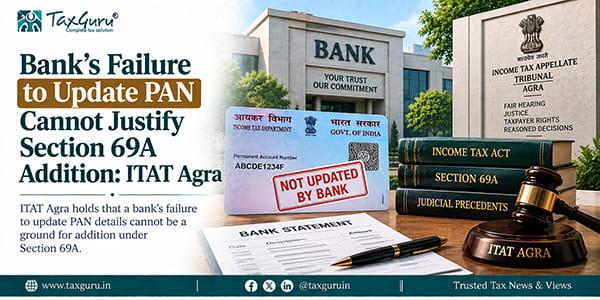
Income Tax
Bank’s Failure to Update PAN Cannot Justify Section 69A Addition: ITAT Agra
Income Tax
Income Tax
Gift from Mother-in-Law Out of Encashed FDs Cannot Be Brushed Aside on Suspicion: ITAT Agra
Corporate Law
Corporate Law
Supreme Court Clarifies Section 28A Limitation After High Court Compensation Enhancement
Corporate Law
Corporate Law
Supreme Court Refers Trademark Jurisdiction Conflict Under Commercial Courts Act to Larger Bench
Income Tax
Income Tax
30% Ad Hoc Purchase Disallowance Without Evidence Deleted by ITAT Agra
Income Tax
Income Tax
AO Must Dispose Reopening Objections Before Reassessment: ITAT Mumbai
Income Tax
Income Tax
Mumbai ITAT Admits Rule 29 Evidence and Remands Capital Gain Cost Claims
Income Tax
Income Tax
Assessee’s Non-Compliance Cannot Cure Section 144B Violation: ITAT Mumbai
Income Tax
Income Tax
Mumbai ITAT Confirms Section 201(1A) Interest and Section 234E Fee for Delayed TDS
Income Tax
Income Tax
Mumbai ITAT Allows ₹8.80 Crore Section 54F Exemption Despite Wrong Section 54 Claim
Income Tax
Income Tax
Export Quota Premium Deduction Denied; Section 263 Revision Upheld: SC
Income Tax
Income Tax
ITAT Mumbai Orders Fresh Review of ₹1.95 Crore Cash Deposits
Income Tax
Income Tax
Delhi High Court Upholds ESOP Deduction and CA Valuation for AY 2018-19
Goods and Services Tax
Goods and Services Tax

