
Type: Orders
Find latest government, departmental and regulatory orders across taxation, corporate law, finance, banking, securities and other compliance matters.
Company Law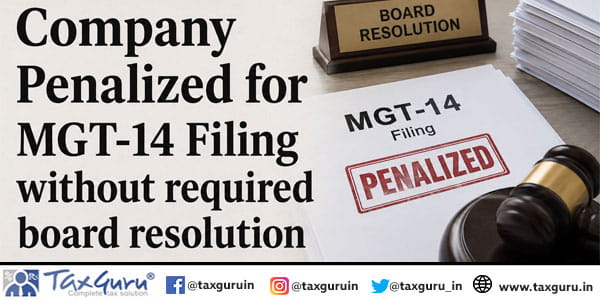
Company Law
Company Penalized for MGT-14 Filing without required board resolution
Company Law
Company Law
ROC Imposes Penalty Due to Incorrect Filing of AOC-4 XBRL Form
Company Law
Company Law
ROC Imposes Penalty Due to Non-Disclosure of Related Party Loan in Board Report
Company Law
Company Law
Director Penalised as Duplicate DIN Continued for 1261 Days Under Companies Act
Company Law
Company Law
ROC Mumbai Imposes Penalty for Delay in Filing MR-2 Form for Non-Resident Director
Company Law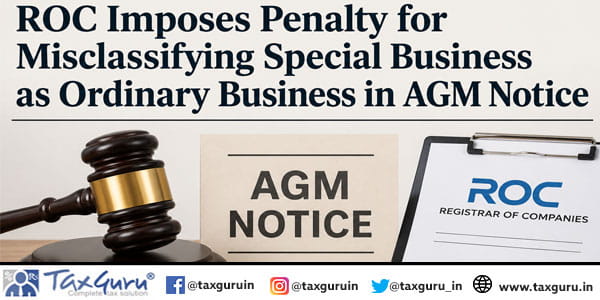
Company Law
ROC Imposes Penalty for Misclassifying Special Business as Ordinary Business in AGM Notice
Company Law
Company Law
ROC Imposes Penalty for Non-Serially Numbered Minutes Book Pages
Company Law
Company Law
ROC Imposes ₹7 Lakh Penalty for 1405-Day Delay in Filing DIR-12
Corporate Law
Corporate Law
Government Revises Dearness Relief Rates for 5th CPC CPF Pensioners
Company Law
Company Law
ROC Imposes Penalty for Delay in Mandatory CFO Appointment
Company Law
Company Law
ROC Imposes Penalty for Share Allottment Before Realisation of Application Money
Company Law
Company Law
ROC Imposes Penalty for Filing Wrong Balance Sheet in AOC-4 Form
Company Law
Company Law
ROC Imposes Penalty for Not Holding Mandatory Board Meetings Under Companies Act
Company Law
Company Law
ROC Imposes Maximum Penalty for Failure to Maintain Registered Office
Orders brings together statutory, administrative and regulatory orders published on TaxGuru across different areas of taxation, business and professional regulation. Orders may concern Income Tax, GST, Customs, Company Law, Corporate Law, DGFT, Excise, Service Tax, FEMA/RBI, SEBI and other subjects. They can address jurisdiction, procedures, authorisations, implementation, compliance dates and other statutory or administrative matters.

