Income Tax : The Income Tax Department has issued detailed FAQs explaining registration, audit, return filing, investment norms, and tax exempt...
Income Tax : The article explains how accurate Form 10BD reporting protects donor deduction claims, prevents penalties, and ensures consistency...
Income Tax : The new framework eliminates mandatory renewals and replaces them with continuous monitoring. Donor eligibility now depends on sus...
Income Tax : The new Income Tax Rules, 2026 permit reapplication within one month of rejection. This provides a faster alternative to appeals a...
Income Tax : The approach differs for pending, rejected, or delayed applications. Trusts must choose the right remedy based on procedural posit...
Income Tax : Authorities cannot insist on adding an irrevocable clause in trust deeds for Section 12A renewal when the trust is otherwise legal...
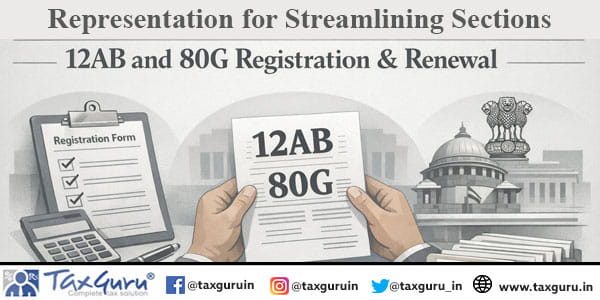
Income Tax : The representation highlights large-scale pendency and administrative bottlenecks under Sections 12AB and 80G, urging immediate re...
Income Tax : This explainer breaks down how Section 80G deductions work and who can claim them. It highlights deduction categories, qualifying ...
Income Tax : The Pune Chartered Accountants' Society has requested an extension for tax audit and ITR filing deadlines for FY 2024-25, citing t...
Income Tax : Suggestions to simplify 12AB and 80G renewal for charitable trusts, proposing conditional approvals, straight-through processing f...
Income Tax : ITAT Mumbai held that eligible CSR donations qualify for Section 80G deduction if statutory conditions are met, despite disallowan...
Income Tax : ITAT Surat held that existing charitable institutions obtaining provisional approval for the first time should not be denied regul...
Income Tax : ITAT condoned the filing delay and remanded the case to the CIT(E) to examine whether the trust satisfies all 80G requirements....
Income Tax : ITAT held Form 10AB was filed beyond the prescribed time but permitted the trust to seek CBDT condonation under Section 119(2)(b) ...
Income Tax : ITAT held no TDS was required as the Revenue failed to prove the services made technical knowledge available under the India-US DT...
Income Tax : Exercising powers under Section 119(2)(b), CBDT has condoned delays in Form 10AB filing for eligible cases. The Circular does not ...
Income Tax : The government notified a historic temple as eligible under Section 80G due to its cultural significance. Deductions apply only fo...
Income Tax : Explore the notification under section 80G(2)(b) of the Income Tax Act 1961 for Shree Ramanuj Kot Trust in Indore. Details of vali...
Income Tax : The amendments brought about by Notification No. 45/2023 – Income-Tax (Income-tax (Eleventh Amendment) Rules, 2023) encompas...
Income Tax : CBDT issued Notification No. 34/2023-Income Tax, dated May 30, 2023 & introduces amendments to rule 11AA of Income-tax Rules, ...
ITAT Indore held that trust has passed resolution dealing with dissolution and utilization of assets in event of dissolution. Accordingly, the said resolution must be accepted by CIT(E) for granting final approval under section 80G of the Income Tax Act. Thus, matter remanded to the file of CIT(E).
The association’s surplus was not distributable to members and activities were non-profit. The ITAT ruled that these factors support charitable character and restored the case for re-evaluation.
The Tribunal dismissed the appeals as time-barred since no application for condonation of delay was filed despite repeated opportunities. In the absence of any explanation, the appeals were held not maintainable.
The PCIT sought to revisit claims already scrutinized and partly disallowed. The Tribunal ruled this to be a change of opinion and invalid. Revision demands clear error and prejudice, not reappraisal.
The issue was whether dividend income loses s.10(34) exemption due to violation of s.11(5). ITAT held that income excluded under Chapter III never enters s.11 computation, so dividend remains exempt.
This explainer breaks down how Section 80G deductions work and who can claim them. It highlights deduction categories, qualifying limits, and mandatory verification with donee filings.
The tribunal held that mere absence of substantial activities since inception is not conclusive where charitable objects are genuine. A fresh opportunity must be granted to substantiate activities with evidence.
The ruling set aside a large AMP adjustment after finding that commission paid to distributors could not be recharacterized as marketing expenditure. Consistency with prior years played a decisive role in deleting the adjustment.
The issue was whether the Assessing Officer could alter income despite a valid APA and modified return. The Court held that without an adverse TPO audit or APA cancellation, reassessment adjustments were without jurisdiction.
The issue highlights that automated messages questioning donation deductions lack clarity on mismatches, forcing donors to revise returns without knowing the actual defect.