
#Section 69A
Log in to FollowLatest Section 69A updates, provisions, case laws, compliance requirements, tax implications and expert analysis under Income-tax law on TaxGuru.
Income Tax
Income Tax
Opening Cash Balance Cannot Be Treated Unexplained Solely for Non-Disclosure
Income Tax
Income Tax
ITAT Deletes Bogus LTCG Addition in absence of Independent Inquiry & Corresponding Bank Credits
Income Tax
Income Tax
No Section 69A Addition for Cash Deposits Explained by Disclosed Instrument Charges
Income Tax
Income Tax
FAQs on Penalty provisions under Income Tax Act, 1961
Income Tax
Income Tax
Pune ITAT Deletes ₹1.14 Crore Addition Based Solely on Hawala Operator’s Statement; Cross-Examination Denial Proves Fatal
Income Tax
Income Tax
NRE Account Credits Cannot Be Taxed Without Proof They Are Unexplained: ITAT Ahmedabad
Income Tax
Income Tax
Non-Disclosure of Tally Data and Forensic Report Violates Natural Justice: ITAT Kolkata
Income Tax
Income Tax
ITAT Quashes Section 153C Assessment as Satisfaction Note Was Common for Multiple Years
Income Tax
Income Tax
ITAT Annuls Section 153A Assessment as Search Warrant Was Not in Assessee’s Name
Income Tax
Income Tax
ITAT Deletes Demonetization Cash Deposit Addition as Books & VAT Records Were Accepted
Income Tax
Income Tax
ITAT Quashes Two Reassessments: Time-Barred Assessment and Second Section 148 Notice During Pendency of Earlier Reassessment Held Invalid
Income Tax
Income Tax
Wrong Section, Wrong Assessment: Bangalore ITAT Annuls Section 143(3) Order Passed After Search
Income Tax
Income Tax
ITAT Remands Cash Deposit Addition as Documentary Evidence Was Not Examined
Income Tax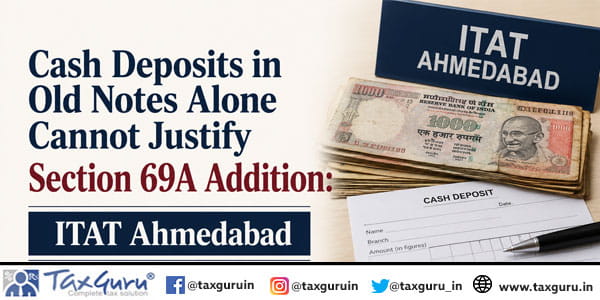
Income Tax
Cash Deposits in Old Notes Alone Cannot Justify Section 69A Addition: ITAT Ahmedabad
Explore the latest Section 69A updates on TaxGuru, including relevant Income-tax Act provisions, rules, notifications, circulars, judicial decisions and compliance guidance. The coverage highlights important tax positions, procedural requirements, assessments, deductions, penalties and litigation developments to help taxpayers and professionals understand the practical implications of changes in income-tax law.

