Income Tax : This guide explains the penalty and prosecution framework under the Income-tax Act for AY 2026-27. It highlights the consequences ...
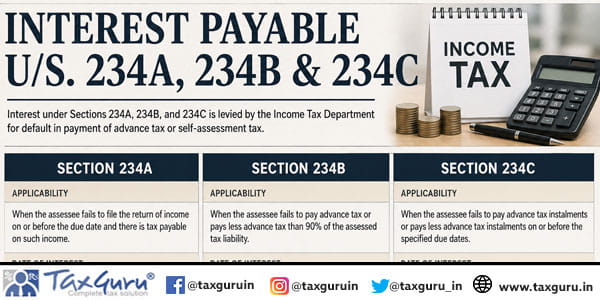
Income Tax : The Income Tax Department explains when interest is payable for delayed return filing, advance tax defaults, deferment of instalme...
Income Tax : The article explains how offences such as wilful tax evasion, failure to file returns, non-payment of TDS/TCS, falsification of re...
Income Tax : This article outlines major offences under the Income-tax Act that may result in prosecution, including tax evasion, non-payment o...
Income Tax : This article explains the statutory powers of the Principal Commissioner or Commissioner to waive or reduce penalties in genuine c...
Income Tax : All Odisha Tax Advocates Association has filed an PIl before Orissa High Court with following Prayers- (i) Admit the Writ Petition...
Income Tax : Representation for relaxation from levy of interest u/s. 234A on payment of self-assessment tax for A.Y. 2020-21 within extended d...
Income Tax : The Government is planning to specify a certain category of taxpayers to pay their entire tax liability for FY 2019-20 in advanc...
Income Tax : At the end of May the Income Tax Return forms are released for the Assessment Year 2015-16 and same been held back by finance mini...
Income Tax : ITAT held an assessment passed after the taxpayer's death was invalid in law, quashed the order, and treated all remaining issues ...
Income Tax : ITAT Jaipur held that a one-day delay in filing Form 10DA could not defeat a Section 80JJAA deduction when the form was on record ...
Income Tax : The ITAT Ahmedabad held that royalty payments should continue to be benchmarked under TNMM by following earlier decisions in the a...
Income Tax : ITAT upheld taxation of IPS and CEV subsidies following the Section 2(24) amendment, while partly allowing the appeal on other iss...
Income Tax : Delhi High Court held the ITAT failed to properly examine the ‘make available’ test for secondment payments, set aside its ord...
Income Tax : The due date of furnishing of Return of Income for the Assessment Year 2021-22, which is 31st July 2021 under sub-section (1) of s...
Income Tax : CIRCULAR NO. 2/2015 The Board has decided that no interest under section 234A of the Act is chargeable on the amount of self-asses...
ITAT ruled that once the Assessing Officer makes no addition on the issue forming the basis of reopening, other additions cannot survive. MAT demand under Section 115JB was therefore struck down as unlawful.
The Tribunal deleted the addition sustained by the CIT(A) as it was based solely on digital data found from a third party. It reiterated that suspicion or extrapolation without direct evidence cannot sustain tax additions.
The Tribunal reversed additions made towards alleged suppressed rent and bogus salary expenses. It emphasized factual consistency, business necessity, and absence of tax avoidance in granting relief to the assessee.
ITAT Mumbai held that balancing figure between the slump sale consideration and the value of identifiable tangible assets represents goodwill or commercial rights in the nature of an intangible asset, and depreciation thereon is allowable under section 32(1)(ii) of the Income Tax Act.
The ruling highlights that mere failure to file return, without concealment or tax evasion, does not automatically attract Section 270A penalty. Bona fide explanation and TDS compliance protected the taxpayer.
The Tribunal ruled that reassessment completed after the taxpayer s death without issuing notice to legal heirs is void ab initio. Legal heirs are not obligated to inform the Revenue about the death.
ITAT held that additions relying merely on investigation wing reports and retracted statements, without direct incriminating evidence, violate settled principles governing Section 153A proceedings.
The Tribunal held that once provisions were disallowed and taxed in an earlier year, their subsequent reversal cannot be taxed again. It directed withdrawal of income offered to prevent double taxation.
The Tribunal held that after submission of primary creditor details, the burden shifted to the AO to disprove the claim. The case was remanded to ensure fair opportunity and proper inquiry.
The Tribunal held that reassessment initiated after three years required approval from the higher authority specified under the amended section 151. Since sanction was obtained from an incorrect authority, the entire proceeding was invalidated.