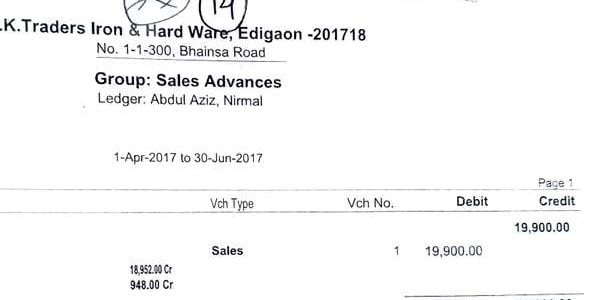
Income Tax : Smt. Ranjana Kumari/Kalta Vs DCIT/ACIT (Central) (ITAT Chandigarh) The appeals involved three assessees belonging to the Kalta Gro...
Income Tax : Learn the updated provisions governing rectification, assessments, reassessments, and appeals under the Income-tax Act. This guide...
Income Tax : The article explains how the Finance Acts, 2025 and 2026 have reshaped the Updated Return regime under Section 139(8A). It highlig...
Income Tax : The article explains that 30 June is the Department's deadline to issue scrutiny notices for eligible returns, not a filing deadli...
Income Tax : The Income Tax Department explains how faceless assessments under Section 144B operate through the e-Filing portal without requiri...
Income Tax : Read how Income Tax Gazetted Officers’ Association addresses last-minute case reallocations affecting timely issuance of notices...
Income Tax : The Supreme Court has ruled that it is mandatory for the Income Tax Department to issue notice within the prescribed time limit of...
Income Tax : ITAT Bangalore held that additions made in an intimation under Section 143(1) cannot be disputed in an appeal against a scrutiny a...
Income Tax : Interest on delayed payment of the FM radio migration fee was a compensatory business expenditure deductible under Section 37(1); ...
Income Tax : ITAT Mumbai remanded the case to examine whether Section 56(2)(x) applied based on the agreement date and to consider refund of ex...
Income Tax : ITAT Mumbai deleted a Section 69 addition after finding documentary evidence established joint ownership, source of funds, and ear...
Income Tax : ITAT Mumbai quashed reassessment after finding no Section 143(2) notice and that the AO issued a final order disguised as a draft ...
Income Tax : Understand the guidelines set by the Indian Ministry of Finance for the compulsory selection of returns for complete scrutiny duri...
Income Tax : CBDT hereby authorises the Assistant Commissioner of Income-tax/Deputy Commissioner of Income-tax (NaFAC) having her / his headqua...
Income Tax : The three formats of notice(s) are: Limited Scrutiny (Computer Aided Scrutiny Selection}, Complete Scrutiny (Computer Aided Scruti...
Income Tax : Central Board of Direct Taxes, with approval of the Revenue Secretary, has decided to modify notice under section 143(2) of the In...
Income Tax : Instruction No.1/2015 Clarification regarding applicability of section 143(1D) of the Income-tax Act, 1961- Vide Finance Act, 2012...
The Chennai ITAT dismissed the Revenue’s appeal after finding that identical issues had already been decided in favour of the assessee in earlier assessment years. The Tribunal followed its previous ruling on software service payments.
Delhi ITAT Restricts Corporate Guarantee Fee to 0.30% After Finding Actual Interest Saving Was Only 0.60%; Holds TP Adjustment Must Reflect Real Benefit From Corporate Guarantee.
The article explains that a scrutiny assessment becomes invalid when the mandatory notice under Section 143(2) is issued by an officer lacking lawful pecuniary jurisdiction. It highlights that such jurisdictional defects cannot be cured through later transfer of the case.
ITAT Nagpur held that reassessment proceedings cannot survive without issuance of a mandatory notice under Section 143(2). The Tribunal ruled that participation by the assessee does not cure complete absence of statutory notice.
The Tribunal ruled that only 8% of disputed purchases could be added where the assessee had disclosed corresponding sales and made payments through banking channels. Entire purchase disallowance was held to distort true business income.
Mumbai ITAT held that granting only seven days for compliance before dismissing an appeal violates principles of natural justice. The Tribunal restored the Section 69C addition matter for fresh adjudication after finding inadequate hearing opportunity.
Mumbai ITAT held that the 10% tolerance band introduced under Section 56(2)(x)(b)(B) is curative and retrospective in nature. The Tribunal deleted addition arising from stamp duty valuation difference as the variation was only 7.44%.
The ITAT held that credits received in the assessee’s bank account were repayments of earlier advances and not unexplained cash credits. The Tribunal deleted the addition after finding that the transactions were supported by bank records and financial documents.
The Tribunal held that once transactions are treated as bogus, there is no basis for separately allowing expenses reflected in gross profit. Telescoping was therefore restricted to net income disclosed in the return.
Delhi ITAT held that Dividend Distribution Tax paid on dividends to non-resident shareholders could be restricted to the treaty rate under applicable DTAAs. The Tribunal relied on the Bombay High Court ruling that DDT is, in substance, a tax on shareholder dividend income.