Income Tax : ITAT held that a return filed under section 148 remains valid even if delayed. Failure to issue mandatory notice under section 143...
Income Tax : Tribunal held that an assessment is void when the competent officer does not issue the mandatory notice. Jurisdiction cannot arise...
Income Tax : A surge in Section 143(2) notices was triggered by the June 2025 limitation deadline. This explains why cases were picked and how ...
Income Tax : Automated risk alerts are delaying income-tax refunds without clear reasons. The law allows withholding only through statutory pro...
Income Tax : Faceless Income-tax proceedings and e-assessments under Section 144B simplify taxpayer compliance. Use the e-filing portal for ele...
Income Tax : Read how Income Tax Gazetted Officers’ Association addresses last-minute case reallocations affecting timely issuance of notices...
Income Tax : The Supreme Court has ruled that it is mandatory for the Income Tax Department to issue notice within the prescribed time limit of...
Income Tax : Delhi ITAT held that Dividend Distribution Tax paid on dividends to non-resident shareholders could be restricted to the treaty ra...
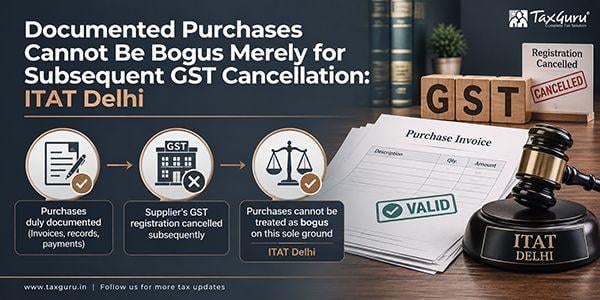
Income Tax : The Hyderabad ITAT held that purchases cannot be treated as bogus merely because the supplier failed to respond to a notice under ...
Income Tax : ITAT Delhi held that the assessee was covered under the search proceedings even though its name did not specifically appear in the...
Income Tax : Court ruled that reassessment notices under Section 148 must be issued through the faceless mechanism under Section 151A and the 2...
Income Tax : ITAT Hyderabad held that addition of Rs. 13 lakh under Section 69A through rectification proceedings exceeded the scope of Section...
Income Tax : Understand the guidelines set by the Indian Ministry of Finance for the compulsory selection of returns for complete scrutiny duri...
Income Tax : CBDT hereby authorises the Assistant Commissioner of Income-tax/Deputy Commissioner of Income-tax (NaFAC) having her / his headqua...
Income Tax : The three formats of notice(s) are: Limited Scrutiny (Computer Aided Scrutiny Selection}, Complete Scrutiny (Computer Aided Scruti...
Income Tax : Central Board of Direct Taxes, with approval of the Revenue Secretary, has decided to modify notice under section 143(2) of the In...
Income Tax : Instruction No.1/2015 Clarification regarding applicability of section 143(1D) of the Income-tax Act, 1961- Vide Finance Act, 2012...
The Tribunal validated reopening under Section 147 based on credible post-search information. Proper procedure under Section 148A was followed, making reassessment lawful.
The Tribunal held that GST collected is not part of income for presumptive taxation under section 44B. It ruled that GST is a statutory levy and cannot be treated as revenue.
The Tribunal held that CIT(A) cannot make a fresh addition without issuing an enhancement notice. Cash redeposits from explained loan withdrawals were accepted as genuine.
The Tribunal held that loss from discontinued operations cannot be restricted without evidence. Fully supported expenses must be allowed under Section 37(1).
The issue was whether rejection of books and GP estimation was justified due to missing records. ITAT upheld the addition, ruling that failure to produce bills, vouchers, and stock records justified estimation.
The issue was whether repayment of loans through banking channels proves genuineness under Section 68. ITAT Delhi held it does not, ruling that bogus loans remain unexplained even if repaid.
The issue was whether a single satisfaction note for multiple years is valid under Section 153C. ITAT Pune held it invalid, ruling that separate satisfaction per year is mandatory, thereby quashing the entire assessment.
The case involved reopening of assessment based on issues already examined during scrutiny. The Court held that reassessment without new material is invalid. It ruled that reopening on the same facts amounts to impermissible action.
The issue was whether protective additions can survive when substantive additions are deleted. The ITAT held that once the substantive addition fails on merits, the protective addition based on the same material cannot be sustained.
Bright Line Test (BLT) could not be applied for determining the Arms Length Price (ALP) of Advertisement, Marketing, and Promotion (AMP) expenditure under the transfer pricing provisions.