Company Law : The analysis clarified that shareholder protection is ensured through ultimate parent consolidation. Hence, intermediate companies...
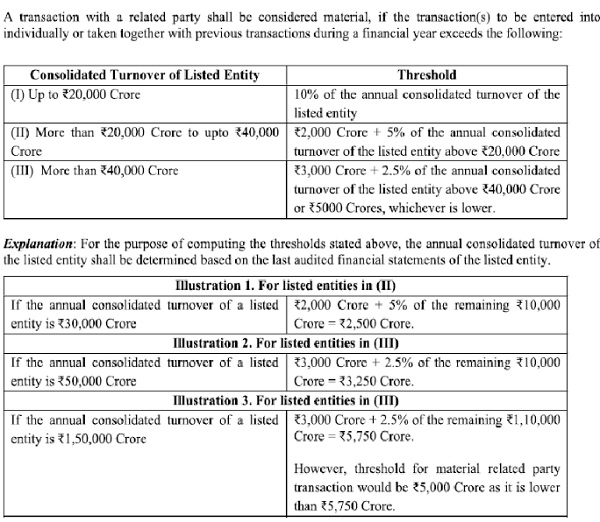
SEBI : The updated Regulation 23 framework introduces turnover-linked thresholds for related party transactions. Listed companies must re...
Company Law : Courts and regulators now treat related party transactions as a core governance issue rather than procedural compliance. The key t...
SEBI : The regulator upheld a turnover-linked materiality framework for related party transactions, replacing the flat 10% test to align ...
CA, CS, CMA : This case explains why related party transactions require heightened audit scrutiny under SA-550. The key takeaway is that influen...
Company Law : The Ministry of Corporate Affairs details measures to ensure transparency and prevent fund diversion in Related-Party Transactions...
SEBI : SEBI is consulting on amendments to LODR Regulations regarding Related Party Transactions. Proposals include new materiality thres...
Company Law : NFRA highlights auditor responsibilities in related party transactions, emphasizing compliance with Ind AS 24, SEBI regulations, a...
SEBI : SEBI seeks public feedback on strengthening secretarial compliance reports, auditor appointment criteria, and related party transa...
SEBI : What does ‘Where a transaction is undertaken between members of the consolidated entity (between the listed entity and its subsi...
Income Tax : In a landmark ruling, the Delhi High Court held that government shareholders are not automatically considered related parties und...
SEBI : A detailed analysis of SAT Mumbai's decision to reduce SecureKloud Technologies' penalty for non-serious LODR violations, and its ...
Company Law : Bar of voting as per Section 188 of the Companies Act, 2013 on related parties operated only at the time of entering into a contra...
Income Tax : Commissioner issued a show cause notice under section 263 and ultimately passed impugned order; by that time the alleged domestic ...
Company Law : The authority penalized directors for executing related party transactions without fresh or valid approvals. It held that reliance...
Company Law : The company relied on old resolutions for ongoing related party transactions. The authority held that fresh approvals are mandator...
Company Law : The company continued related party transactions based on old approvals. The authority held that fresh approvals are mandatory, le...
Company Law : The issue involved non-compliance with approval requirements for related party transactions. The authority held that absence of Bo...
Company Law : The case addresses non-disclosure of directors’ interests in related entities. Authorities imposed penalties, reinforcing strict...
The authority held that failure to disclose related party contracts and justifications in the Board’s Report violates statutory transparency norms. A personal monetary penalty was imposed on the responsible director.
The regulator upheld a turnover-linked materiality framework for related party transactions, replacing the flat 10% test to align approvals with entity size while retaining shareholder scrutiny for high-impact deals.
The adjudicating authority held that failure to disclose deposits accepted from related parties violated mandatory Board report norms. The key takeaway is strict enforcement of deposit disclosure requirements under company law.
This case explains why related party transactions require heightened audit scrutiny under SA-550. The key takeaway is that influence and control, not just legal structure, determine audit risk and disclosure obligations.
Explore how GST reverse charge, multi-state registration, and cross-border royalties create compliance hurdles for related-party transactions, emphasizing proper documentation and reporting.
Explains SEBI’s 2025 amendments easing audit committee approvals, revising materiality limits, and clarifying related-party definitions. Key takeaway: compliance becomes simpler and more proportionate to company size.
SEBI relaxes related-party transaction norms by introducing turnover-linked thresholds, reducing shareholder approvals and easing compliance for listed companies.
The amendment introduces Schedule XII, replacing earlier monetary limits with turnover-linked thresholds for material related party transactions. It strengthens audit committee oversight and standardises approval requirements across listed entities.
SEBI streamlined RPT disclosure (Oct 2025), introducing threshold-based relaxation. Transactions up to ₹1 crore are fully exempt, while smaller RPTs use the simplified Annexure-13A format.
SEBI eases RPT disclosure requirements for listed entities, introducing a tiered mechanism. Transactions below Rs. 10 crore now require simplified reporting, reducing compliance burden.