
Courts: Supreme Court of India
Read latest Supreme Court of India judgments and orders on Income Tax, GST, Customs, Company Law and other taxation, corporate and commercial laws.

SC Declines Interference in ₹90.62 Lakh E-Way Bill Penalty Case

SC Upholds Quashing of Section 148A Reopening Based on Roving Inquiry
Supreme Court Preserves Bangalore Water Supply Test for Legacy ID Act Cases

Supreme Court Disposes Jay Ace Technologies SLP in Terms of Abhisar Buildwell

SEBI Circular Governs Debenture Defaults; Dissenters Can Opt Out of Resolution Plan: SC
SC Upholds Arbitral Award on Liquidated Damages, Limits Section 34 Review
SC Rejects Primogeniture Approach in Hamdard Chief Mutawalli Dispute
SC Upholds Arbitral Award; Section 18 Acknowledgment Extends Limitation
Supreme Court Curbs Mechanical Fraud Allegations in GST Section 74 Notices
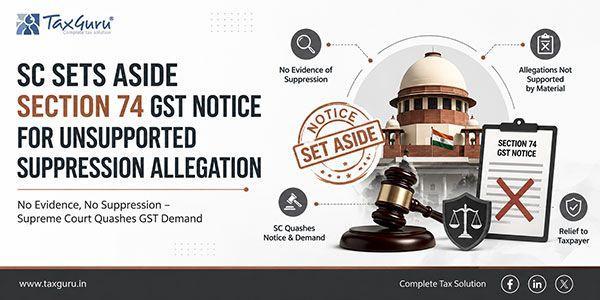
SC Sets Aside Section 74 GST Notice for Unsupported Suppression Allegation
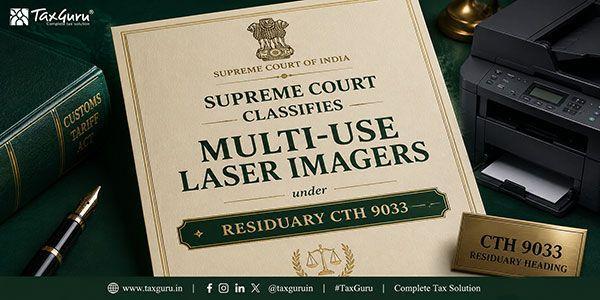
Supreme Court Classifies Multi-Use Laser Imagers under Residuary CTH 9033
Section 10B(8) Declaration Deadline Mandatory: SC
Excess-Quota Peas & Pulses as Prohibited Goods, SC Upholds Absolute Confiscation
Supreme Court Upholds Specific Performance in 1989 Property Sale Agreement
Supreme Court of India brings together Supreme Court judgments and orders published on TaxGuru concerning taxation, corporate, commercial and regulatory laws. The archive covers Income Tax, GST, Customs, Company Law, insolvency, constitutional and other legal issues relevant to taxpayers, businesses and professionals. Readers can research authoritative rulings on statutory interpretation, substantial questions of law, constitutional issues and appeals from High Courts and tribunals. Chartered Accountants, advocates, tax professionals, companies and legal researchers can use this category to follow important Supreme Court jurisprudence relevant to taxation and business laws.

