
Courts: Supreme Court of India
Read latest Supreme Court of India judgments and orders on Income Tax, GST, Customs, Company Law and other taxation, corporate and commercial laws.

Section 16 Arbitration Order Cannot Be Re-examined in Writ Jurisdiction: SC Dismisses Appeal

Supreme Court Quashes Forced Settlement in CWC-APSEZL SEZ Warehouse Dispute

SC Declines Interference in Service Tax Relief for Pre-2016 Mining Rights
SC Quashes NGT Proceedings When High Court Was Seized of Matter
Supreme Court Remands JCB India Excise Dispute to Larger Bench
SC Sets Aside HC Interference in Arbitration, Directs Tribunal to Decide Non-Signatory Status
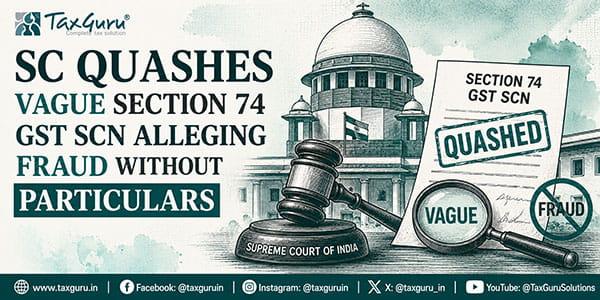
SC Quashes Vague Section 74 GST SCN Alleging Fraud Without Particulars

NGT Cannot Direct State on Development Plan: SC

Limitation Runs From Filing of Complaint, Not Magistrate’s Cognizance: SC

High Court Cannot Conduct Factual Trial While Quashing FIR: SC

Civil Dispute Cannot Be Given Criminal Colour, Quashes FIR: SC

SC Dismisses Section 263 Challenge Where AO Had Conducted Inquiry and Verification
Appellate Court Cannot Travel Beyond Scope of Appeal: Supreme Court
Employee Accepting CPF Benefits Cannot Claim GPF Pension After Retirement: SC
Supreme Court of India brings together Supreme Court judgments and orders published on TaxGuru concerning taxation, corporate, commercial and regulatory laws. The archive covers Income Tax, GST, Customs, Company Law, insolvency, constitutional and other legal issues relevant to taxpayers, businesses and professionals. Readers can research authoritative rulings on statutory interpretation, substantial questions of law, constitutional issues and appeals from High Courts and tribunals. Chartered Accountants, advocates, tax professionals, companies and legal researchers can use this category to follow important Supreme Court jurisprudence relevant to taxation and business laws.

