
Courts: Supreme Court of India
Read latest Supreme Court of India judgments and orders on Income Tax, GST, Customs, Company Law and other taxation, corporate and commercial laws.

Some Access Is Not Adequate Access Under Zero Period Policy: SC

Supreme Court Remands Mittal Pigments Customs Classification Matter to CESTAT
Statutory Incorporation Does Not Bar Minority Status: Supreme Court
SC: Section 29A Mandate Can Be Extended After Award; Late Award Unenforceable

SC Condones Delay in Refiling IBC Appeal, Orders Merits Hearing
EDC Not Rent, No TDS under Section 194-I: SC

Limitation for Excess Freight Refund Suit Runs From SC’s Final Order After SLP Admission
Supreme Court Quashes Arbitrary Tender Annulment After LOA Issuance

SC Treats Blind Employee as 100% Functionally Disabled, Awards ₹3.78 Crore

SC: Security Advance Is Earnest Money, Liable to Forfeiture; Refund Requires Specific Prayer
SC Upholds RBI’s 5-Year Supersession Power u/s 36AAA Over Co-op Banks
SC Directs NOIDA to Waive Developer’s Delay Penalty, Excludes It from CIRP Costs
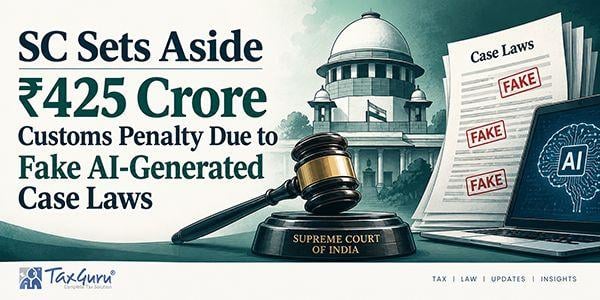
SC Sets Aside ₹425 Crore Customs Penalty Due to Fake AI-Generated Case Laws
Penalty Not Automatic for Delayed Foreign Travel Tax Payment: SC
Supreme Court of India brings together Supreme Court judgments and orders published on TaxGuru concerning taxation, corporate, commercial and regulatory laws. The archive covers Income Tax, GST, Customs, Company Law, insolvency, constitutional and other legal issues relevant to taxpayers, businesses and professionals. Readers can research authoritative rulings on statutory interpretation, substantial questions of law, constitutional issues and appeals from High Courts and tribunals. Chartered Accountants, advocates, tax professionals, companies and legal researchers can use this category to follow important Supreme Court jurisprudence relevant to taxation and business laws.

