
Courts: Rajasthan High Court
662 articlesGoods and Services Tax
Goods and Services Tax
Rajasthan HC Condoned 450-Day GST Appeal Delay Over Portal-Only Order Service
Goods and Services Tax
Goods and Services Tax
Rajasthan HC Condoned GST Appeal Delay Where Order Was Only Uploaded on Portal
Goods and Services Tax
Goods and Services Tax
Supplier’s Tax Non-Payment Bars Buyer’s ITC: Rajasthan High Court
Goods and Services Tax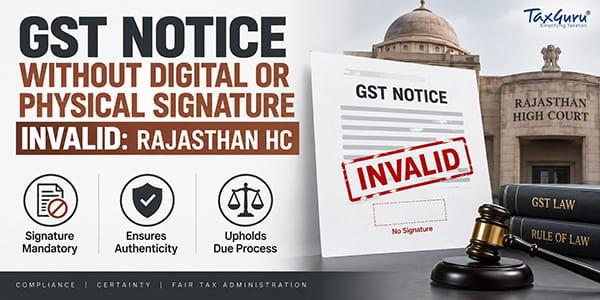
Goods and Services Tax
GST Notice Without Digital or Physical Signature Invalid: Rajasthan HC
Goods and Services Tax
Goods and Services Tax
Unsigned GST Notices Invalid; Rs.15.16 Lakh Recovery Refund Ordered: Rajasthan HC
Goods and Services Tax
Goods and Services Tax
GST Applies to Highway Annuity as Works Contract: Rajasthan High Court
Custom Duty
Custom Duty
Rajasthan HC Quashes Drawback Recovery Made Without Prior Customs Reassessment
Goods and Services Tax
Goods and Services Tax
Rajasthan HC Condones 645-Day GST Appeal Delay Over Portal-Only Order Service
Income Tax
Income Tax
Rajasthan HC Dismisses Immunity Plea for Section 270A Misreporting Penalty
Income Tax
Income Tax
Rajasthan HC Rejects Section 68 Share Capital Addition Based Only on Suspicion & Doubt
Goods and Services Tax
Goods and Services Tax
Rajasthan HC Protects Ex-Director From Arrest in GST/ITC Fraud Investigation
Goods and Services Tax
Goods and Services Tax
Rajasthan HC Condones 645-Day GST Appeal Delay Over Portal Service
Goods and Services Tax
Goods and Services Tax
Rajasthan HC Restores Delayed GST Appeal After Accountant’s Compliance Failure
Goods and Services Tax
Goods and Services Tax

