
Courts: Rajasthan High Court
Find latest Rajasthan High Court judgments, orders and case laws on Income Tax, GST, Company Law and other taxation, commercial and legal matters.
₹20.28 Crore Fake ITC Case: Rajasthan HC Denies Bail
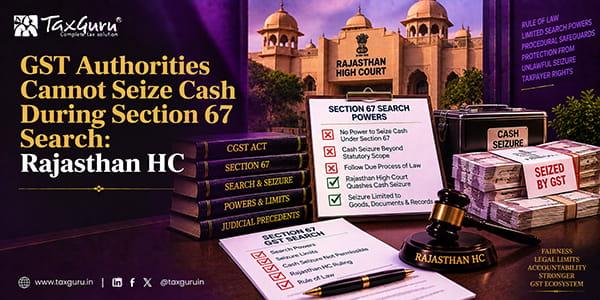
GST Authorities Cannot Seize Cash During Section 67 Search: Rajasthan HC

Section 271E Penalty Requires AO Satisfaction in Reassessment Order: Rajasthan HC
Rajasthan HC Condones 125-Day GST Appeal Delay Caused by Ineffective Portal Communication

CBDT Cannot Add 31 January Eligibility Condition to Settlement Applications: Rajasthan HC

Section 153C Proceedings Stayed Pending SC Decision: Rajasthan HC
Unsigned GST Show Cause Notice and Order Are Non Est: Rajasthan HC

Excess Recovery Beyond 20% of Disputed Tax Demand Must Be Refunded: Rajasthan HC

HC Can Condon GST Appeal Delay Beyond Section 107 Limit: Rajasthan High Court
Rajasthan HC Condoned GST Appeal Delay Citing Portal Service & Medical Circumstances
KVSS Cannot Bar Refund of Tax Outside Settlement: Rajasthan HC
Section 80HHC Deduction Must Be Computed Independently Before Section 80-IA Restriction: Rajasthan HC
25-Year-Old Reassessment Dispute Remitted to AO for Fact-Finding: Rajasthan HC
No Interest on MOOWR Capital Goods Intended for Warehouse Use: Rajasthan HC
Rajasthan High Court judgments and orders address significant issues concerning taxation, business and other areas of law. This TaxGuru page compiles Rajasthan High Court case laws on Income Tax, GST, tax demands, input tax credit, refunds, reassessment, penalties, Company Law and other legal disputes. Taxpayers, businesses, Chartered Accountants, advocates and tax professionals can use the collection to research judicial precedents and follow important developments before the Court. TaxGuru brings together recent and significant earlier Rajasthan High Court decisions with concise summaries and analysis of key legal principles. The page provides a convenient reference point for researching tax, commercial and regulatory jurisprudence of the Rajasthan High Court.

