
Courts: Madras High Court
Find latest Madras High Court judgments, orders and case laws on Income Tax, GST, Customs, Company Law, IBC and other tax and commercial matters.
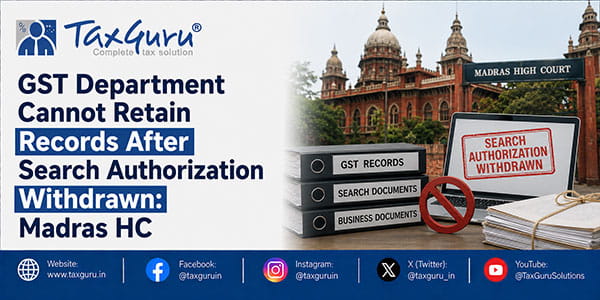
GST Department Cannot Retain Records After Search Authorization Withdrawn: Madras HC

Provisional GST Section 83 Attachment Automatically Ceases After One Year: Madras HC

Madras HC Remands GST Order for Fresh Adjudication on 50% Tax Deposit

Madras HC Upholds 7% Bus Body Drawback as Duplicate Benefit Was Not Established

Madras HC Upholds GST Recovery, Grants 30 Days to Appeal with 25% Tax Deposit

Madras HC Sets Aside ₹2.04 Crore 26AS Assessment as Expenses Were Overlooked
Madras HC: Investigation Wing Information Alone Cannot Justify Reassessment
Madras HC Allows Section 37(1) Deduction for Mandatory Site Restoration Cost

Mere Tax Payment Delay Insufficient for Section 276C(2) Prosecution: Madras HC
Madras HC Allows GST Amnesty Waiver for Self-Assessed Tax Under Section 128A
Madras HC: SFIO Case Against Auditor Quashed – No Wilful Default or False Statement Alleged
Madras HC Dismisses SARFAESI Writ, Directs Borrower to Approach DRT Within 30 Days
Madras HC Upheld RBI Ombudsman’s Findings on GST Refund, Bank Charges & NPA
Madras HC Permits Advocate Appointment to Examine Income Tax Records in Liquidation
Madras High Court judgments and orders constitute an extensive source of jurisprudence concerning taxation, corporate and commercial disputes. This TaxGuru page brings together Madras High Court case laws on Income Tax, GST, Customs, Company Law, insolvency, input tax credit, refunds, reassessment, tax demands, penalties and other legal matters. Taxpayers, companies, Chartered Accountants, advocates and tax professionals can use this collection to research judicial precedents and follow developments affecting tax and business law. TaxGuru publishes recent and significant earlier Madras High Court decisions with summaries and analysis highlighting important issues and legal principles. The page provides a convenient resource for researching taxation, corporate, commercial and regulatory litigation before the Madras High Court.

