
Courts: Calcutta High Court
Find latest Calcutta High Court judgments, orders and case laws on Income Tax, GST, Customs, Company Law, IBC and other tax, business and legal matters.
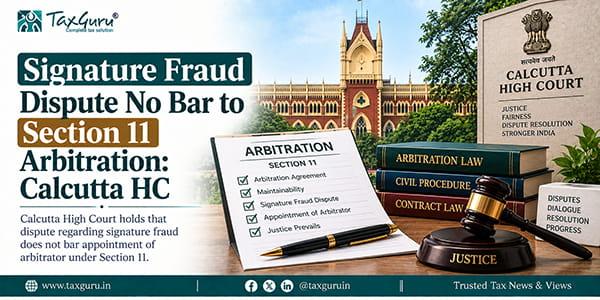
Signature Fraud Dispute No Bar to Section 11 Arbitration: Calcutta HC

Single Section 74 SCN for Multiple Financial Years Invalid: Calcutta HC

Calcutta HC Quashes Rule 96(10) GST Demand After Unconditional Omission
Interest on Delayed Excise Refund Runs From Original Application Date: Calcutta HC
Calcutta HC Quashes GST Orders Over Notice Uploaded Under Additional Tab
Calcutta HC Sets Aside GST Order for Section 75(4) Violation, Remands for Fresh Decision
Calcutta HC Remands GST Demand Order for Fresh Hearing Under Section 75(4)
Calcutta HC Restores GST Registration After Non-Filing of Returns, Subject to Compliance
Calcutta HC Quashes GST Adjudication Order for Denial of Personal Hearing
Calcutta High Court Restores GST Appeal Dismissed on Limitation, Citing Natural Justice
Calcutta HC Quashes Single GST Notice Covering Multiple Financial Years
Calcutta HC Orders Post-Decisional Hearing on Rs.4.43 Crore ITC Blocked under Rule 86A
Calcutta Hc Upholds Ad Hoc Superannuation Fund Contribution for Actuarial Deficit
Calcutta HC Allows Extension of ITC Rectification Time Under Section 16(5)
Calcutta High Court judgments and orders provide important precedents across taxation, corporate, commercial and other areas of law. This TaxGuru page collects Calcutta High Court case laws concerning Income Tax, GST, Customs, Company Law, insolvency, banking, reassessment, penalties, recovery and procedural issues. Taxpayers, businesses, Chartered Accountants, advocates and tax professionals can use this category to research relevant High Court decisions and follow developments in tax and commercial jurisprudence. The collection includes recent judgments as well as significant earlier Calcutta High Court rulings published on TaxGuru. Case summaries and analysis assist readers in understanding the issues before the Court, the legal principles applied and the implications of important judicial decisions.

