
Courts: All ITAT
Read latest ITAT judgments and orders on Income Tax, including assessments, deductions, TDS, capital gains, transfer pricing, penalties and other tax disputes.

Sponsorship Receipts Do Not Make Golf Association Commercial: ITAT Delhi

ITAT Mumbai Deletes Section 68 Addition Based on Accommodation Entry Statement

ITAT Mumbai Allows Section 80G Deduction for CSR Donations Despite Section 37 Disallowance
Bogus-Purchase Allegation Alone Cannot Trigger Section 69C & 115BBE: ITAT Delhi
CSR 80G Deduction: Section 263 Fails Where AO Adopts a Plausible View

Section 69A: Earlier Loan Repayment Cannot Be Branded Accommodation Entry
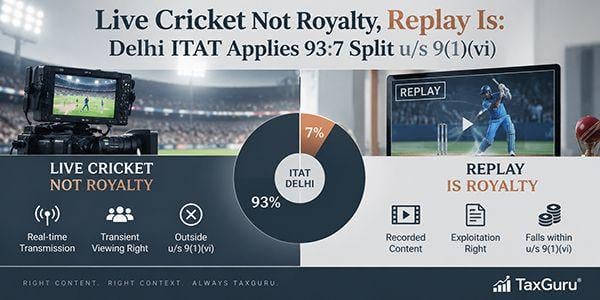
Live Cricket Not Royalty, Replay Is: Delhi ITAT Applies 93:7 Split u/s 9(1)(vi)

No CGAS Deposit, Yet Section 54F Survives Where New House Is Bought Within Two Years
NSE Investor Protection Fund Trust Wins Exemption Dispute on Section 11(2) Accumulation: ITAT Mumbai
ITAT Surat Deletes TDS Demand on GIA Diamond Grading Charges under India-USA DTAA
ITAT Mumbai: Diamond Grading Charges Not Fees for Technical Services, No TDS under Section 195

Five Clear Days Instead of Seven Invalidates Section 148A(b) Notice: ITAT Raipur

ITAT Deletes Section 68 Addition Where Jewellery Cash Sales Were Recorded in Books
Payee’s Tax Payment Can Shield Payer From Section 201 Default: ITAT Delhi
All ITAT brings together Income Tax Appellate Tribunal judgments and orders from ITAT benches across India. The archive covers income-tax disputes involving assessments and reassessments, business income, deductions, exemptions, capital gains, TDS, transfer pricing, international taxation, penalties, unexplained income, search assessments and other provisions of the Income-tax Act. Chartered Accountants, advocates, tax professionals, businesses and taxpayers can use this consolidated TaxGuru category to research ITAT precedents across different benches and follow developments in income-tax jurisprudence. Individual ITAT bench categories are also available for location-specific decisions.

