
Courts: All ITAT
Read latest ITAT judgments and orders on Income Tax, including assessments, deductions, TDS, capital gains, transfer pricing, penalties and other tax disputes.

Reassessment Notice Quashed as Time-Barred After Supreme Court Ruling

Delay in Form 10AB Condoned; Rejection of 12AB Registration & 80G Approval Set Aside

CIT(A) Remand Invalid for Not Deciding Legal Grounds
Section 68 Addition Deleted as No Credit Entry Found in Books
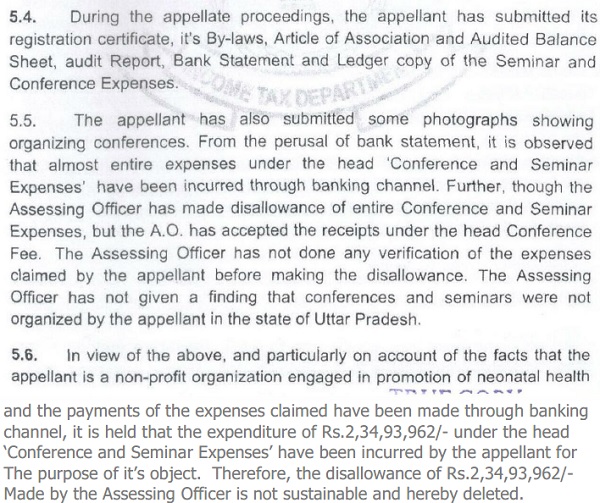
Conference Expenses Deletion Set Aside for Rule 46A Violation
Rejection of 12AB Renewal Set Aside for Procedural Impossibility
Additions Under Section 153A Quashed for Lack of Incriminating Material
Delay in Form 10AB Filing Condoned for Existing Charitable Trusts

Faceless CIT(A) Cannot Reject Appeal for Admitted Tax Payment Lapse: ITAT Raipur

Bogus Purchase Disallowance Restricted to 6% on Estimation by ITAT Delhi
Section 68 Addition for mere Non-Compliance to Summons: ITAT Kolkata
Foreign Tax Credit Allowed as Form 67 Delay Is Procedural: ITAT Mumbai
Interest in Form 26AS Not Taxable on Accrual Under Cash System Without Verification: ITAT Mumbai
Reopening Quashed as Limitation Under Old Regime Expired: ITAT Mumbai
All ITAT brings together Income Tax Appellate Tribunal judgments and orders from ITAT benches across India. The archive covers income-tax disputes involving assessments and reassessments, business income, deductions, exemptions, capital gains, TDS, transfer pricing, international taxation, penalties, unexplained income, search assessments and other provisions of the Income-tax Act. Chartered Accountants, advocates, tax professionals, businesses and taxpayers can use this consolidated TaxGuru category to research ITAT precedents across different benches and follow developments in income-tax jurisprudence. Individual ITAT bench categories are also available for location-specific decisions.

