

Articles by this Author
Income Tax
Income Tax
Wrong Clause in Form 10AB Cannot End Section 80G Claim: ITAT Pune
Income Tax
Income Tax
Bitumen Is Not ‘Other Valuable Article’ Under Section 69A: Supreme Court
Goods and Services Tax
Goods and Services Tax
GST Registration Restored on Filing Pending Returns Within Six Weeks: Calcutta HC
Corporate Law
Corporate Law
Civil Court Orders Cannot Block SARFAESI Section 14 Possession: Punjab & Haryana HC
Income Tax
Income Tax
ITAT Mumbai Quashes Section 263 Revision on ESOP Cost & Facebook Advertisement Payments
Income Tax
Income Tax
ITAT Mumbai Deletes Facebook Advertisement and ESOP Disallowances for AY 2016-17
Corporate Law
Corporate Law
SARFAESI Redemption Right Continues Till Sale Certificate: Punjab & Haryana HC
Custom Duty
Custom Duty
No MRP-Based CVD on Disinfectants Supplied to Government Hospitals: CESTAT Kolkata
Income Tax
Income Tax
ITAT Delhi Quashes Section 263 Revision Based on Incorrect Balance-Sheet Appreciation
Goods and Services Tax
Goods and Services Tax
Admitted Receipt of GST Show Cause Notice Defeats No-Notice Plea: Gauhati HC
Fema / RBI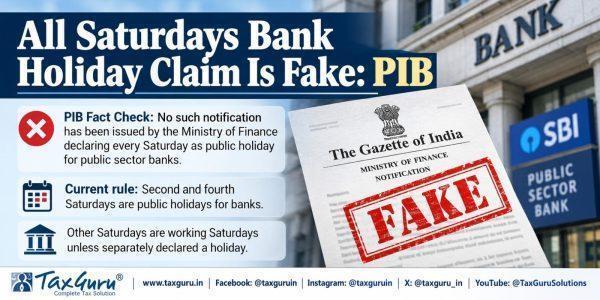
Fema / RBI
All Saturdays Are Not Bank Holidays: PIB Debunks Fake Gazette Notification
Corporate Law
Corporate Law
Captain Smit Machchhar: Indian Pilot Who Helped Save Flydubai FZ1073
Corporate Law
Corporate Law
Sections 2(2) and 3A Highway Acquisition Notifications Valid: Supreme Court
Corporate Law
Corporate Law

