

Articles by this Author
Income Tax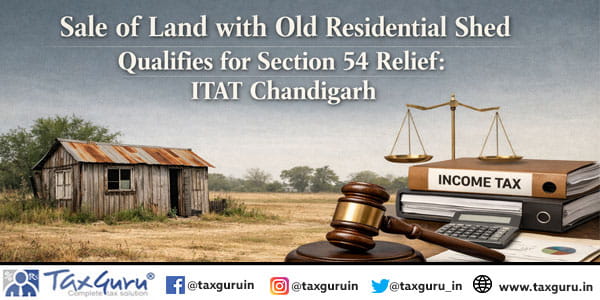
Income Tax
Sale of Land with Old Residential Shed Qualifies for Section 54 Relief: ITAT Chandigarh
Income Tax
Income Tax
ITAT Ahmedabad Upholds ₹2.40 Cr Disallowance u/s 40A(2)(b) for Excess Director Remuneration
Income Tax
Income Tax
Entire Bogus Purchases Cannot Be Added When Sales Accepted: ITAT Dehradun Restricts Addition to 4%
Income Tax
Income Tax
ITAT Pune Quashes Section 263 Revision; Upholds 80P Deduction on Bank Interest
Income Tax
Income Tax
Indexed Cost of Improvement Must Be Allowed Even for Cash Payments: ITAT Rajkot
Income Tax
Income Tax
Only Profit Element Taxable on Cash Deposits & Unsecured Loans: ITAT Rajkot
Income Tax
Income Tax
TDS on Interest to Co-operative Societies: ITAT Mumbai Holds Co-operative Bank Liable u/s 194A
Income Tax
Income Tax
No Depreciation, No Section 50: ITAT Mumbai Deletes Addition on Car Sale
Income Tax
Income Tax
Section 271(1)(c) Penalty Deleted as Section 14A Disallowance Alone Is Not Enough: ITAT Mumbai
Income Tax
Income Tax
Section 271(1)(c) Penalty not leviable on estimated bogus-purchase disallowance: ITAT Mumbai
Income Tax
Income Tax
Assessment Set Aside for Non-Consideration of Mandatory Penalty Provisions
Income Tax
Income Tax
Section 148 Notices Void as Issued Outside Mandatory Faceless Scheme
Income Tax
Income Tax
ITAT Mumbai Restricts Bogus Purchase Addition to 6%; Full 69C Disallowance Set Aside
Income Tax
Income Tax

