

Articles by this Author
Income Tax
Income Tax
ITAT Deletes ₹71.10 Lakh Penalty for Genuine Interest Claim Made in Wrong Year
Income Tax
Income Tax
Section 148 Notice Beyond Surviving Limitation Quashed: ITAT Ahmedabad
Income Tax
Income Tax
Section 69 Addition Deleted as Customer Funded Vehicle Purchase: ITAT Ahmedabad
Income Tax
Income Tax
Demerger Requires Adjusted Cost of Unlisted Shares: ITAT Ahmedabad
Income Tax
Income Tax
Section 80GGC Deduction for ₹1 Lakh Political Donation Denied: ITAT Ahmedabad
Corporate Law
Corporate Law
Disputed Contract Claim Cannot Be Recovered as Ascertained Debt: Supreme Court
Corporate Law
Corporate Law
Supreme Court Quashes SARFAESI Auction Sale for Violating Mandatory Statutory Safeguards
Corporate Law
Corporate Law
Section 138 Notice Received by Drawer’s Mother Is Valid Service: Supreme Court
Income Tax
Income Tax
Section 69A Addition Remanded as Evidence Was Ignored: ITAT Amritsar
Income Tax
Income Tax
AO Must Prove Assessment Order Was Passed Within Time: ITAT Ahmedabad
Income Tax
Income Tax
Reassessment Quashed as Pr. CIT Was Wrong Sanctioning Authority: ITAT Hyderabad
Income Tax
Income Tax
Six Flats and Villa: CIT(A) Cannot Dismiss Section 54 Appeal for Non-Prosecution
Income Tax
Income Tax
FD Encashment Cannot Be Counted Again as Bank Deposit: ITAT Hyderabad
Income Tax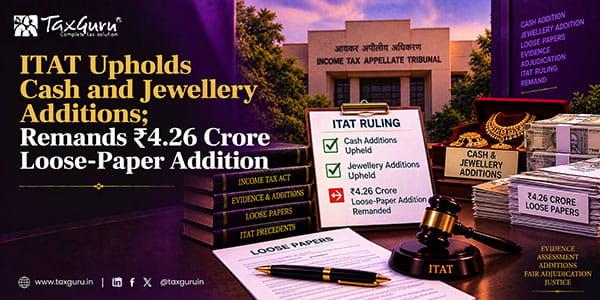
Income Tax

