

Articles by this Author
Income Tax
Income Tax
Third-Party ERP Entries Alone Cannot Justify Section 69 Addition: ITAT Deletes Jewellery Purchase Addition
Income Tax
Income Tax
Reassessment Quashed for Ignoring Reply Filed Under Section 148A(b): ITAT Slams ‘Borrowed Satisfaction’
Income Tax
Income Tax
Entire Land Deal Receipts Cannot Be Taxed as Income: ITAT Restricts Addition to Estimated Profit Element
Income Tax
Income Tax
Goat Trader Fails to Explain ₹7.10 Crore Bank Deposits: ITAT Upholds Section 69A Addition Despite U/s 44AD Claim
Income Tax
Income Tax
No 270A Penalty When Income Declared in 148 Return Is Accepted: ITAT Deletes ₹4.91 Lakh Penalty
Income Tax
Income Tax
Subsequent 12AA Registration Saves Trust: ITAT Treats Corpus Donation as Capital Receipt, Deletes Tax Addition
Income Tax
Income Tax
ITAT Deletes Capital Gains & Alleged On-Money Addition: Agricultural Land Outside Section 2(14), 50C Inapplicable
Income Tax
Income Tax
Premature Surrender of Pension Policy Not Taxable as Income from Other Sources: ITAT Ahmedabad
Income Tax
Income Tax
Cancelled Property Deal Cannot Trigger Section 69 Addition: ITAT Deletes ₹4.96 Lakh Unexplained Investment Addition
Income Tax
Income Tax
Capital Introduced in Firm Not Automatically Unexplained Income: ITAT Ahmedabad
Income Tax
Income Tax
ITAT Hyderabad Upholds Sec 263 Revision Over Inadequate Capital Gains Inquiry
Income Tax
Income Tax
U/s 153C Assessments Quashed – Mere Seized Material Not Enough Unless AO Shows Its Bearing on Total Income
Income Tax
Income Tax
Hyderabad ITAT Upholds Reopening Beyond 3 Years Though Final Addition Was Below ₹50 Lakhs – Jurisdiction Based on Reopening Information
Income Tax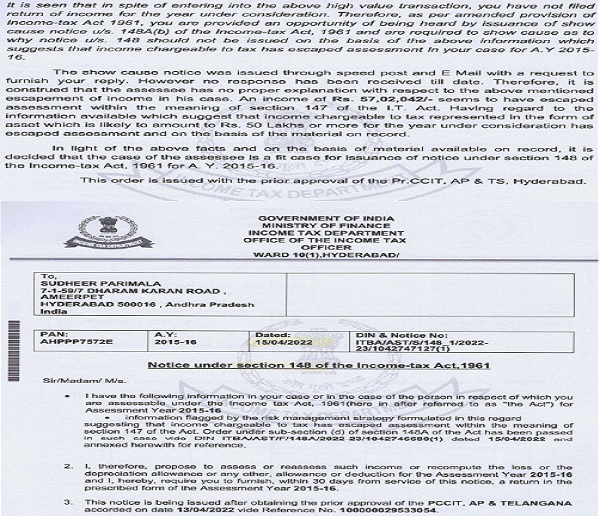
Income Tax

