
Type: Notifications/Circulars
Find latest notifications, circulars, instructions, orders, guidelines, directions, press releases and regulatory updates across tax, corporate, finance and business laws.

Penalty Imposed for Delay in Filing PAS-6 Share Capital Report

Advisory on Interest Collection and Related Enhancements in GSTR-3B

Five-Year Tax Recognition Granted for Research to Rajalakshmi University Trust

SEBI Removes Letter of Confirmation requirement for Faster Demat Credit

SEBI Opens One-Year Special Window for Legacy Physical Share Transfers

Pension Advisory Committee Reconstituted to Broaden Policy Expertise
Penalty Levied for Failure to Attach Valuation Report in Securities Allotment
₹18,000 Monthly Limit Set to Define Supervisory Employees as Workers
Penalty Imposed for Failure to Maintain Statutory Meeting Minutes
Penalty Imposed for Incorrect AGM Date in Statutory Filing
Penalty Imposed for Incorrect AOC-4 Filing Under Residual Provisions of Companies Act
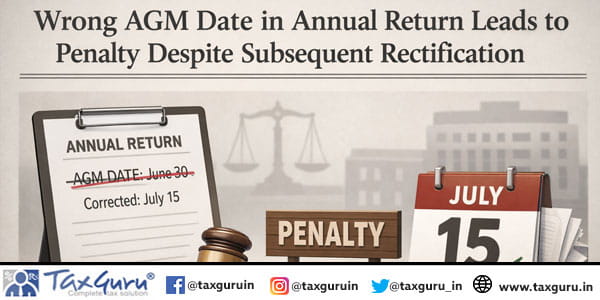
Wrong AGM Date in Annual Return Leads to Penalty Despite Subsequent Rectification
Penalty Imposed for Failure to File Annual Return Under Companies Law
Directors Penalised for Non-Compliance with Annual Return Filing Rules
Notifications/Circulars is TaxGuru’s central archive of statutory, departmental and regulatory documents. It brings together notifications, circulars, instructions, guidelines, orders, master circulars, master directions, press releases, public notices, regulations and trade notices covering Income Tax, GST, Customs, Company Law, Corporate Law, DGFT, Excise, Service Tax, FEMA/RBI, SEBI, finance and professional matters concerning CA, CS and CMA. Readers can use the archive and its existing subcategories to locate official and regulatory developments relevant to different subjects covered by TaxGuru.

