Goods and Services Tax : GSTN has implemented automated interest computation through the Tax Liability Break-up mechanism in GSTR-3B to identify delayed ta...
Goods and Services Tax : GSTN has made Table 3.2 of GSTR-3B non-editable with auto-population from GSTR-1/1A/IFF. The update ensures consistency in inter-S...
Goods and Services Tax : Learn how to file your GSTR-9 annual return, including details of supplies, ITC, taxes paid, and adjustments for FY 2024-25....
Goods and Services Tax : GSTN issued advisories on SPL forms, IRN case insensitivity from June 2025, GSTR-1 Table 12 changes, and GSTR-3B Table 3.2 auto-po...
Goods and Services Tax : From January 2025, reporting HSN codes in GSTR-1/1A Table 12 is mandatory. Key changes include auto-populated descriptions, dropdo...
Goods and Services Tax : GSTN introduces Phase-III changes to GSTR-1 from April 2025 with dropdown HSN selection, tab-wise B2B/B2C reporting, and value val...
Goods and Services Tax : Learn how to file GSTR-1A with our comprehensive manual and FAQs. Get step-by-step guidance and clear answers to common questions....
Goods and Services Tax : The advisory clarifies that from November 2025, auto-populated values in Table 3.2 of GSTR-3B cannot be manually edited. Any corre...
Goods and Services Tax : Understand how to manage inadvertently rejected invoices, debit notes, and credit notes on IMS, including ITC claims for recipient...
Goods and Services Tax : GSTN updates GSTR-1/1A reporting. HSN code reporting in Table 12 is mandatory (4/6 digits based on turnover). Table 13 (document d...
Goods and Services Tax : From April 2025, GSTR-1 Table-12 will be split into B2B and B2C with mandatory HSN code selection from dropdown. Manual entry will...
Goods and Services Tax : The Supplier View functionality in GST IMS allows suppliers to track actions taken by recipients on invoices, ensuring better tr...
GSTN has implemented automated interest computation through the Tax Liability Break-up mechanism in GSTR-3B to identify delayed tax payments relating to earlier periods. The update shifts GST compliance from manual assessment to system-driven validation based on invoice dates, reporting periods, and payment timelines.
GSTN has made Table 3.2 of GSTR-3B non-editable with auto-population from GSTR-1/1A/IFF. The update ensures consistency in inter-State supply reporting and restricts corrections to prescribed amendment routes.
The advisory clarifies that from November 2025, auto-populated values in Table 3.2 of GSTR-3B cannot be manually edited. Any corrections must be made through GSTR-1A, which will instantly update the figures.
Learn how to file your GSTR-9 annual return, including details of supplies, ITC, taxes paid, and adjustments for FY 2024-25.
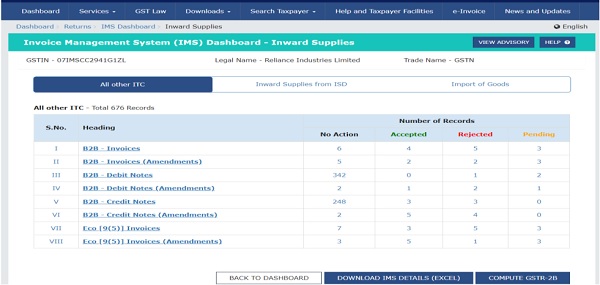
Understand how to manage inadvertently rejected invoices, debit notes, and credit notes on IMS, including ITC claims for recipients and liability impacts for suppliers.
GSTN updates GSTR-1/1A reporting. HSN code reporting in Table 12 is mandatory (4/6 digits based on turnover). Table 13 (document details) is also now required.
GSTN issued advisories on SPL forms, IRN case insensitivity from June 2025, GSTR-1 Table 12 changes, and GSTR-3B Table 3.2 auto-population becoming non-editable from April 2025.
GSTN introduces Phase-III changes to GSTR-1 from April 2025 with dropdown HSN selection, tab-wise B2B/B2C reporting, and value validations to improve compliance.
From April 2025, GSTR-1 Table-12 will be split into B2B and B2C with mandatory HSN code selection from dropdown. Manual entry will not be allowed.
From January 2025, reporting HSN codes in GSTR-1/1A Table 12 is mandatory. Key changes include auto-populated descriptions, dropdown selection, and bifurcated tabs.