Corporate Law : NCLAT held that the CoC may decide to liquidate a corporate debtor under Section 33(2) before inviting resolution plans, with limi...
Corporate Law : This article explains why the Insolvency and Bankruptcy Code places commercial decision-making in the hands of the Committee of Cr...
Corporate Law : The article explains how the NCLAT interpreted Section 66(1) to extend liability beyond company insiders to third parties who know...
Corporate Law : The Supreme Court held that individuals investing for financial returns rather than home ownership cannot invoke Section 7 of the ...
Corporate Law : The High Court held that a company cannot shift its registered office after approval of a resolution plan when appeals against the...
Corporate Law : IBBI has proposed amendments to CIRP, Liquidation, and Personal Guarantor Regulations to improve valuation, clarify RP duties, sim...
Corporate Law : The proposed amendments require comprehensive project-wise disclosures, technical assessments, and mandatory information in resolu...
Corporate Law : The IBBI has announced contractual vacancies for Research Associates and Consultants in law and business management disciplines. T...
Corporate Law : 2026 Guidelines streamline selection of Insolvency Professionals for IRP, RP, Liquidator, and Bankruptcy Trustee roles, ensuring t...
Corporate Law : The amendments replace the consultation committee with CoC oversight, giving creditors greater control over liquidation decisions....
Corporate Law : Bombay HC held that Section 14 IBC moratorium does not prevent deemed conveyance under Section 11 MOFA and restored the society's ...
Company Law : Kerala HC held Rule 55 empowers NCLT to accept additional pleadings, setting aside refusal to entertain further objections in a Se...
Corporate Law : NCLAT held that invoice discounting through the TReDS platform does not convert operational debt into financial debt. The appeal w...
Corporate Law : Supreme Court held that a Section 7 IBC application can proceed despite pending winding-up proceedings where no irreversible stage...
Corporate Law : NCLT admitted the Section 9 petition after holding that campaign-related emails did not constitute a genuine pre-existing dispute....
Corporate Law : The IBBI First Appellate Authority held that although the CPIO failed to respond within the statutory 30-day period under the RTI ...
Corporate Law : IBBI cancelled an IP’s registration over systemic CIRP misuse, flawed valuations, non-disclosures, compliance failures and lack ...
Corporate Law : IBBI has released the Phase 10 syllabus for the Limited Insolvency Examination, effective from October 1, 2026, to reflect evolvin...
Corporate Law : The First Appellate Authority directed the CPIO to dispose of the RTI application after finding it was not decided within the 30-d...
Corporate Law : The Disciplinary Committee found that the Resolution Professional delayed admission of a financial creditor's claim and failed to ...
On and from the date the application for the start of CIRP is filed, there will be an extra interim moratorium on FSPs. The temporary ban will last until the application is approved or denied. The moratorium outlined in Section 14 of the Code shall be in effect following the Adjudicating Authority’s admission of the CIRP application’s initiation.
Opportunity for Public Equity Shareholders after CIRP: A Measure for Protection or Myopia? Explore the proposed framework by SEBI to allow public equity shareholders in listed companies undergoing Corporate Insolvency Resolution Process (CIRP) to acquire shares in the resultant entity.
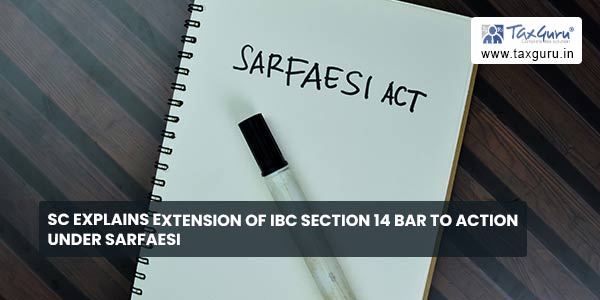
Section 7 of Insolvency and Bankruptcy Code (IBC) enables a Financial Creditor (FC) to initiate Corporate Insolvency Resolution Process (CIRP) against a Corporate Debtor when a default on a debt has occurred.
Discussion Paper on measures for increasing the possibility of resolution, value of resolution plan and enabling timely resolution analyses resolution processes that have been completed and are ongoing, presents the understanding of issues that are adversely affecting the efficiency and effectiveness of the resolution process. The issues are of a wide spectrum and proposals have been made to resolve the same.
Under section 196(1)(aa) of IBC, IBBI is responsible to promote development of, and regulate, working and practices of, insolvency professionals in furtherance of purposes of Code.
IBBI) Disciplinary Committee has suspended the registration of Mr. Brij Kishore Sharma, an Insolvency Professional (IP), for a period of one year. The suspension comes after findings of contraventions related to various violations in his role as IRP and RP in corporate insolvency resolution processes and as a Liquidator in voluntary liquidation. The Insolvency and […]
The Insolvency and Bankruptcy Board of India’s Disciplinary Committee has issued an order regarding Ms. Sonu Jain, an Insolvency Professional, based on alleged contraventions under the Insolvency and Bankruptcy Code. The order addresses specific issues raised in the Show Cause Notice and provides an analysis and conclusion on the matter. The order discusses three main […]
NCLT is not conferred with power of review, it inherently possesses the power to recall a judgment on sufficient grounds under Rule 11 of National Company Law Appellate Tribunal Rules, 2016
NCLAT Delhi held that held that the Lenders and Banks are obliged to discharge their obligations as per the Resolution Plan and Resolution Applicant must also perform its obligation as per the Resolution Plan.
NCLAT Delhi held that when Agreement was admittedly executed between the parties, signed by both the parties and acted upon, mere fact that it not being engrossed on stamped papers shall have no adverse consequence on the claim of the Operational Creditor.