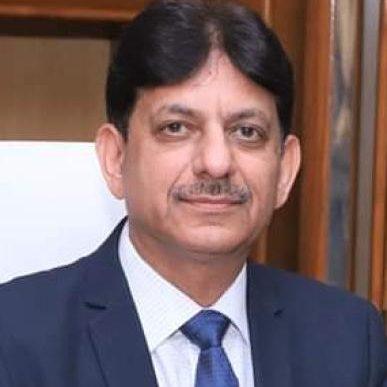
The Reserve Bank of India Monetary Policy announced by Sanjay Malhotra on 8 April 2026 maintained a stable policy stance, keeping the repo rate unchanged at 5.25% under the LAF framework while continuing with a neutral policy approach. The RBI projected GDP growth at 6.9% and CPI inflation at 4.6% for FY 2026–27, reflecting balanced economic expectations. Key regulatory reforms include easing CRAR computation by allowing inclusion of quarterly profits without restrictive conditions, removal of Investment Fluctuation Reserve requirements for certain banks, and rationalisation of board governance norms. Supervisory instructions are being consolidated into master directions for clarity. Additionally, measures aim to boost MSME participation in TReDS by simplifying onboarding, and deepen financial markets by expanding participation in the term money market. Overall, the policy reflects stability, regulatory simplification, and financial sector development.
A. Resolution of Monetary Policy Committee
The various decisions taken in the meeting of Monetary Policy Committee are as follows.
– To keep the policy repo rate under the liquidity adjustment facility (LAF) unchanged at 5.25 per cent. Consequently, the standing deposit facility (SDF) rate remains at 5.00 per cent and the marginal standing facility (MSF) rate and the Bank Rate remains at 5.50 per cent.
– The MPC also decided to continue with the neutral stance.
– The real GDP growth for 2026-27 projected at 6.9%.
– The CPI Inflation projected for 2026-27 at 4.6%.
– The updated policy rates are Repo- 5.25%, SDF- 5.00%, MSF and Bank Rate- 5.50%, CRR– 0%, SLR- 18.0%, Fixed Reverse Repo- 3.35%.
B. Statement on Development and Regulatory Policies
The various measures set out are as follows.
(Link: RBI Monetary Policy- Development & Regulatory Policies Dated 08/04/2026)
I. Regulations
1. Review of guidelines for inclusion of Quarterly Profits in Capital to Risk- weighted Assets Ratio (CRAR) computation: As per the extant guidelines, commercial banks (excluding Regional Rural Banks and Local Area Banks) are permitted to include quarterly net profits in the calculation of CRAR provided that the incremental provisions made for Non-Performing Assets (NPAs) at the end of any of the four quarters of the previous financial year, have not deviated more than 25 per cent of the average of the four quarters. It has been reviewed and proposed to dispense with this condition.
2. Review of Guidelines on Investment Fluctuation Reserve (IFR):
Banks currently maintain Investment Fluctuation Reserve (IFR) as an additional buffer against depreciation in the value of their investments, subject to mark-to-market (MTM) requirements. Currently, commercial banks (including Local Area Banks, but excluding Small Finance Banks, Payment Banks and Regional Rural Banks) already maintain capital charge for market risk and also follow revised norms on classification, valuation, and operation of investment portfolio. In consideration of these applicable prudential requirements, it is proposed to dispense with the IFR requirement for such commercial banks.
3. Review of matters placed before the Boards of the Banks: The matters to be placed before the Boards of banks, along with their periodicity, are determined by the Boards themselves, guided by the seven broad themes prescribed by the Reserve Bank of India. Meanwhile, RBI has also mandated certain policies and matters to be placed before the Board for approval, review, or information. RBI has undertaken comprehensive review and rationalization of all such instructions. The draft directions will be issued shortly.
II. Supervision
4. Consolidation of Supervisory Instructions: RBI had undertaken a comprehensive consolidation exercise of the regulatory instructions, on an ‘as is’ basis, in 2025. The exercise involved consolidation of more than 9000 existing regulatory circular/ guidelines into 238 function-wise Master Directions (MDs), specific to each category of regulated entity. A similar exercise has now been carried out for the supervisory instructions. Accordingly, the drafts of 64 Master Directions consolidating extant supervisory instructions on up to nine functional areas are being published for public comments.
III. Payment Systems
5. Simplifying the onboarding process of MSMEs in Trade Receivables Discounting System (TReDS): In order to promote ease of doing business for MSMEs and to encourage their greater participation on TReDS, it is proposed to dispense with the requirement of due diligence of MSMEs while onboarding on TReDS platforms. A comprehensive review of other extant instructions has also been undertaken, and draft directions will be issued shortly.
IV. Financial Markets
6. Development of Term Money Market: At present, only banks and standalone primary dealers are eligible to participate in the term money market, with certain prudential limits. With a view to further enhance the depth of participation and liquidity in the term money market segment, it has been decided to (a) expand the participant base in the term money market segment to include non-bank participants viz., AIFIs, NBFCs, including housing finance companies, companies, etc. and (b) enhance the borrowing limit in the term money market for standalone primary dealers.
Source: RBI Monetary Policy- Resolution, Governor Statement Dated 08/02/2026)
*******
Disclaimer: The contents of this article are for informational purposes only. The user may refer to the relevant notification/ circular/ decisions issued by the respective authorities for specific interpretation and compliances related to a particular subject matter)