
Courts: Kerala High Court
Find latest Kerala High Court judgments, orders and case laws on Income Tax, GST, Customs, Company Law and other taxation, business and legal matters.

Income tax appeal cannot be rejected solely for non-appearance by CIT(A) Kerala HC
Custom Writ Petition Dismissed Over Misclassification Allegation & Goods Seizure
Kerala HC: Lower Conversion Factor Applies to Pre-2012 Myanmar Timber Imports; Additional Duty Refund Allowed
Kerala HC Upholds New Building Tax Assessment for Expanded Plinth Area
Ayurvedic Centre Classified as Hospital, Not Hotel: Kerala HC Sets Aside Luxury Tax
GST Advance Ruling Denial Set Aside Because Prior Proceedings Had No Merits Decision
Proceedings against recipient for ITC mis-match not sustained as no proceedings initiated against supplier
Benefit of SVLDRS allowed as payment made within extended period due to COVID
Bias Concerns & Pre-Disposed Mind: Kerala HC Invalidate Service Tax Order
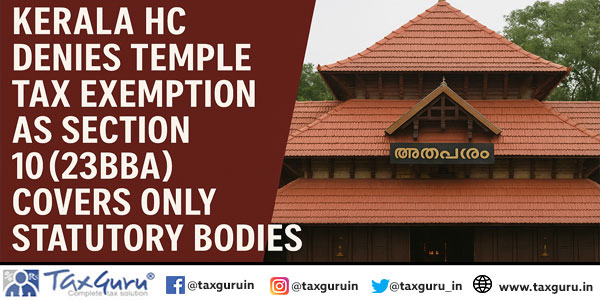
Kerala HC Denies Temple Tax Exemption as Section 10(23BBA) Covers Only Statutory Bodies
Interest on Delayed Agricultural Tax Payment not allowable: Kerala HC
Writ Petition Not Maintainable in Penalty Proceedings with Factual Disputes
ITAT Cannot Uphold Section 263 Revision on Grounds Not Raised by Commissioner: Kerala HC
Counsel’s Lapse No Excuse for Petitioner’s Delay if Appellant not diligent: Kerala HC
Kerala High Court judgments and orders cover important questions concerning taxation, business, commercial and other laws. This TaxGuru page compiles Kerala High Court case laws involving Income Tax, GST, Customs, input tax credit, tax demands, refunds, registration, reassessment, penalties, Company Law and other legal disputes. Taxpayers, businesses, Chartered Accountants, advocates and tax professionals can use this collection to research judicial precedents and follow important developments before the Court. TaxGuru brings together recent and significant earlier Kerala High Court decisions with summaries and analysis explaining key issues and legal principles. This page provides a convenient resource for researching tax, commercial and regulatory jurisprudence of the Kerala High Court.

