
Courts: Delhi High Court
Find latest Delhi High Court judgments, orders and case laws on Income Tax, GST, Customs, Company Law, IBC, FEMA and other tax and commercial matters.

GST Registration Appeal Restored as Limitation Extended by SC Orders: Delhi HC
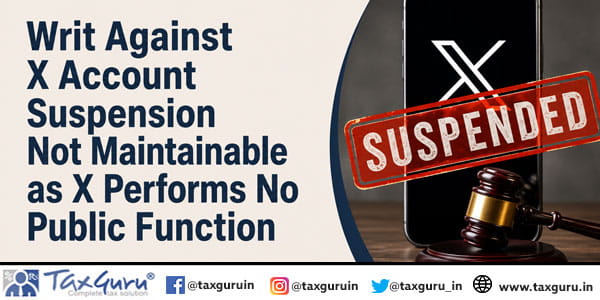
Writ Against X Account Suspension Not Maintainable as X Performs No Public Function
IBA Caution List Inclusion Order Set Aside for Absence of Reasons: Delhi HC
Interrogatories Maintainable in Oppression & Mismanagement Proceedings: Delhi HC
Section 69C Addition for Unexplained Capitation Fee Upheld: Delhi HC
GST Refund Cannot Be Withheld Without Stay of Appellate Orders: Delhi HC
GST Refund Cannot Be Withheld Without Stay of Appellate Order: Delhi HC
Section 54(11) Cannot Withhold GST Refund Without Pending Appeal: Delhi HC
Delhi HC Lay Down Right to Be Forgotten Framework for Online Judicial Records
Unreasoned Assessment Order Justifies Section 263 Revision: Delhi HC
Interest on Borrowings to Retain Business Control Allowable U/s 36(1)(iii): Delhi HC
Section 14A Disallowance Not Allowed as No Exempt Income Was Earned
Employee Secondment Reimbursements Taxable as FTS as’Make Available’ Test Was Satisfied: Delhi HC
Delhi HC Dismisses Assessment Passed Beyond Section 144C Time Limit
Delhi High Court judgments and orders constitute a substantial source of jurisprudence on taxation, corporate, commercial and regulatory law. This TaxGuru page compiles Delhi High Court case laws concerning Income Tax, GST, Customs, Company Law, insolvency, FEMA, international taxation, reassessment, TDS, penalties and other business and legal disputes. Companies, taxpayers, Chartered Accountants, advocates and tax professionals can use this collection to research judicial precedents and monitor important legal developments. TaxGuru brings together recent and significant earlier Delhi High Court decisions, supported by case summaries and analysis explaining the principal issues and findings. The page provides a convenient research resource for readers following tax, corporate, commercial and regulatory litigation before the Delhi High Court.

