
Courts: All ITAT
Read latest ITAT judgments and orders on Income Tax, including assessments, deductions, TDS, capital gains, transfer pricing, penalties and other tax disputes.

Limited Scrutiny Can Examine Source, but It Cannot Tax Same Money Twice: ITAT Hyderabad

Spelling Error Can’t Make Eucalyptus Sale Bogus Without Enquiry: ITAT Chandigarh
AO Can’t Assign Imaginary Scrap Value to Obsolete Stock: ITAT Chandigarh

Section 80GGC Deduction Cannot Be Denied for Political Party’s Misconduct: ITAT Rajkot
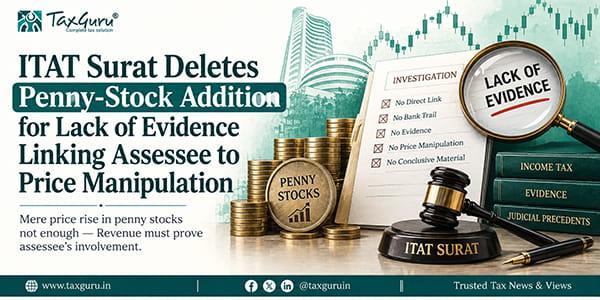
ITAT Surat Deletes Penny-Stock Addition for Lack of Evidence Linking Assessee to Price Manipulation

Family Diary Entry Alone Can’t Prove Unexplained Expenditure: ITAT Ahmedabad

Subsequent Section 143(1) Intimation Void After Scrutiny Commences: ITAT Bangalore
ITAT Chandigarh Treats Survey Surrender as Business Income, Rejects 60% Section 115BBE Rate
ITAT Visakhapatnam Quashes Section 271AAB Penalty for Defective Section 274 Notice
ITAT Rajkot Deletes GP Addition Without Section 145(3) Rejection and Limited Scrutiny Conversion
Section 28 Interest Part of Compensation, Eligible for Section 10(37) Exemption: ITAT Rajkot
ITAT Hyderabad Dismisses IL&FS Tax Appeals Due to NCLAT Restraint
ITAT Rajkot Deletes SBI TDS Demand for Foreign-Leg LFC Under HC Order
Section 148 Notice Issued Beyond Two-Day Surviving Limitation Quashed: ITAT Rajkot
All ITAT brings together Income Tax Appellate Tribunal judgments and orders from ITAT benches across India. The archive covers income-tax disputes involving assessments and reassessments, business income, deductions, exemptions, capital gains, TDS, transfer pricing, international taxation, penalties, unexplained income, search assessments and other provisions of the Income-tax Act. Chartered Accountants, advocates, tax professionals, businesses and taxpayers can use this consolidated TaxGuru category to research ITAT precedents across different benches and follow developments in income-tax jurisprudence. Individual ITAT bench categories are also available for location-specific decisions.

