
Courts: All ITAT
Read latest ITAT judgments and orders on Income Tax, including assessments, deductions, TDS, capital gains, transfer pricing, penalties and other tax disputes.

Section 148 Reopening Invalid Without Independent Application of Mind: ITAT Delhi
Section 153C Assessment Beyond Ten-Year Block Period Invalid: ITAT Delhi

Section 69C Addition Deleted as Source of Purchase Payments Was Explained: ITAT Mumbai
Section 120 Jurisdiction Must Follow CBDT Notification; Assessment Quashed: ITAT Patna
Management Support Fees Not FTS Without ‘Make Available’ Under Article 12(4): ITAT Mumbai

CIT(A) Cannot Replace Section 68 for Section 69A Without Hearing: ITAT Raipur
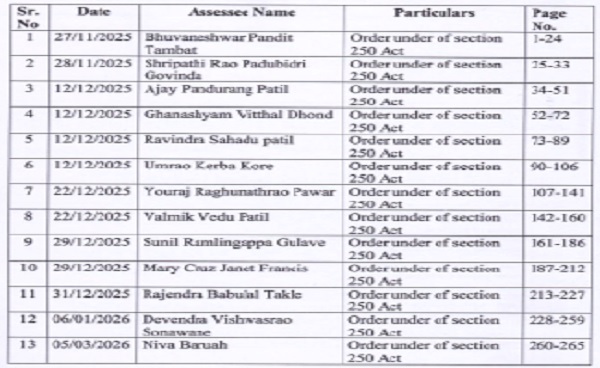
BSNL VRS Compensation Qualifies for Section 10(10B) Exemption: ITAT Panaji

BSNL VRS Compensation Exempt Under Section 10(10B): ITAT Pune

Delay in Appeal Condoned to Allow Section 10(10B) Exemption Claim: ITAT Ahmedabad
Section 80G Deduction for Eligible CSR Donations Allowed; TP Adjustments Deleted: ITAT Delhi
CSR Donation Eligible for Section 80G Despite Section 37(1) Disallowance: Delhi ITAT
CSR Donations Eligible for Section 80G Deduction Despite Section 37(1) Disallowance: Delhi ITAT
Section 80G Deduction on Eligible CSR Donations Allowed Despite Section 37(1) Disallowance: ITAT Delhi
Section 80P(2)(d) Deduction on Cooperative Bank Interest Allowed: ITAT Pune
All ITAT brings together Income Tax Appellate Tribunal judgments and orders from ITAT benches across India. The archive covers income-tax disputes involving assessments and reassessments, business income, deductions, exemptions, capital gains, TDS, transfer pricing, international taxation, penalties, unexplained income, search assessments and other provisions of the Income-tax Act. Chartered Accountants, advocates, tax professionals, businesses and taxpayers can use this consolidated TaxGuru category to research ITAT precedents across different benches and follow developments in income-tax jurisprudence. Individual ITAT bench categories are also available for location-specific decisions.

