
Courts: All ITAT
Read latest ITAT judgments and orders on Income Tax, including assessments, deductions, TDS, capital gains, transfer pricing, penalties and other tax disputes.

ITAT Pune Sets Aside CIT(A) Order for Denial of Video Conferencing Hearing

ITAT Delhi: Reassessment Quashed as ITO Lacked Jurisdiction Under CBDT Instruction
ITAT Pune Sets Aside Denial of Section 80P(2)(d) Deduction on Interest Income
ITAT Panaji Allows Section 80P(2)(d) Deduction on Interest From Co-operative Society
ITAT Panaji Allows Section 80P(2)(d) Deduction on Interest From Co-operative Bank

ITAT Raipur: Ad Hoc Wage Disallowance Cut to ₹1 Lakh; Section 68 Additions Deleted
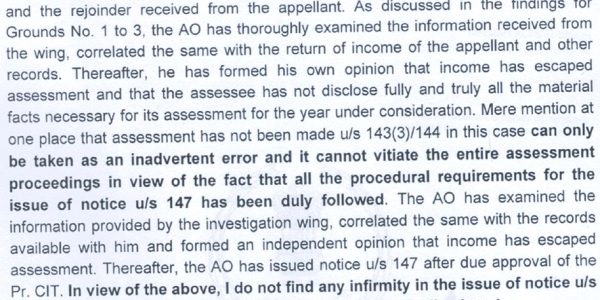
ITAT Pune Quashes Reassessment Based on Wrong Facts and Borrowed Satisfaction
Registered Society Taxable at Normal Rates, Not Maximum Marginal Rate: ITAT Pune
ITAT Mumbai Deletes Section 68 Addition on Genuine Penny Stock LTCG Claim
ITAT Pune Allows Section 80IB(10) Deduction Despite Delayed Form 10CCB Filing
ITAT Amritsar Remands Section 12AB Registration due to Natural Justice Violation
ITAT Pune Allows Section 11 Exemption Despite Delayed Form 10BB Filing
ITAT Cancels Reassessment Based Solely on Unverified ITBA Portal Information
Delhi ITAT Deletes ₹2 Crore Addition for Lack of CBI Evidence
All ITAT brings together Income Tax Appellate Tribunal judgments and orders from ITAT benches across India. The archive covers income-tax disputes involving assessments and reassessments, business income, deductions, exemptions, capital gains, TDS, transfer pricing, international taxation, penalties, unexplained income, search assessments and other provisions of the Income-tax Act. Chartered Accountants, advocates, tax professionals, businesses and taxpayers can use this consolidated TaxGuru category to research ITAT precedents across different benches and follow developments in income-tax jurisprudence. Individual ITAT bench categories are also available for location-specific decisions.

