
Courts: All High Courts
Read latest High Court judgments and orders on Income Tax, GST, Customs, Company Law and other taxation, corporate, commercial and regulatory matters.

Telangana HC Allows Appeal as Consultant Failed to Inform Taxpayer of GST Order
Telangana HC Permits Revocation Application for Time-Barred GST Registration Cancellation

Delhi HC Upholds CGST Search of Advocate’s Premises with Privilege Safeguards

Legitimate Deductions Cannot Be Denied Merely for Non-Filing Revised Return: Madras HC

Rajasthan HC Quashes Section 148 Notice as Time-Barred and Issued by JAO
Telangana HC Permits GST Appeal Against Section 74 Common Adjudication Order

Telangana High Court Permits Withdrawal of GST Writ with Liberty to Refile

Telangana HC Allows GST Appeal Against Section 73 Order with Delay Application
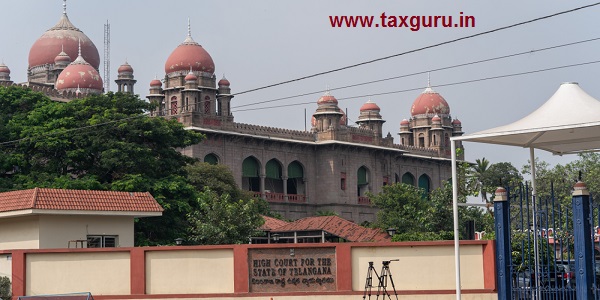
Telangana HC Allows GST Appeal and Restrains Coercive Recovery for Two Weeks
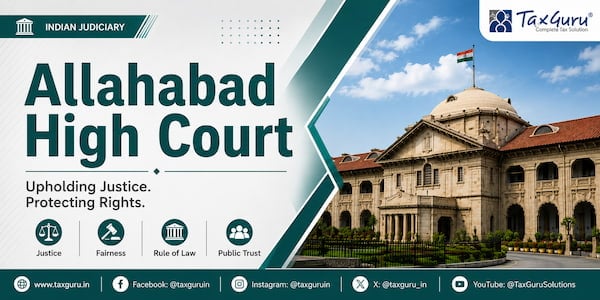
Deputy Commissioner Had GST Section 122 Jurisdiction, Allahabad HC Allows Statutory Appeal
Telangana HC Allows Fresh Manual GST Revocation Application Within Two Weeks
Telangana HC Grants Two Weeks to File GST Appeal Under Section 73
Telangana HC Allows GST Registration Revocation Application Through Physical Filing
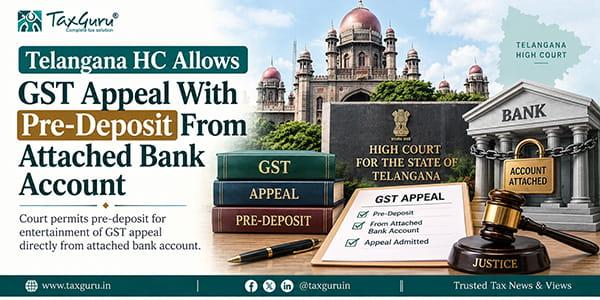
Telangana HC Allows GST Appeal With Pre-Deposit From Attached Bank Account
All High Courts brings together judgments and orders of High Courts across India published on TaxGuru. The archive covers Income Tax, GST, Customs, Company Law, Corporate Law, insolvency, commercial laws and other taxation and regulatory matters. Readers can research important questions of law, constitutional challenges, writ petitions, statutory appeals and other proceedings decided by different High Courts. Chartered Accountants, advocates, tax professionals, businesses and legal researchers can use this consolidated archive to follow High Court jurisprudence across India. Separate High Court categories are available for court-specific judgments and orders.

