
Courts: All High Courts
Read latest High Court judgments and orders on Income Tax, GST, Customs, Company Law and other taxation, corporate, commercial and regulatory matters.
Supplier’s Tax Non-Payment Bars Buyer’s ITC: Rajasthan High Court

Delhi High Court Dismisses NSE Divestment PIL for Forum Shopping
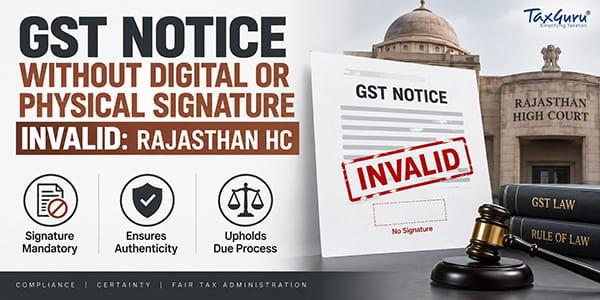
GST Notice Without Digital or Physical Signature Invalid: Rajasthan HC

Customs SCN Cannot Be Reopened After Settlement Election: Delhi HC
₹20.33 Crore Income Tax Refund to Be Credited Within Two Weeks: Delhi HC

Unsigned GST Notices Invalid; Rs.15.16 Lakh Recovery Refund Ordered: Rajasthan HC
GST Arrest Accused Granted Regular Bail Due to Prolonged Trial: Chhattisgarh HC
Delhi HC Allows TDS Credit to Employee Despite Kingfisher Airlines’ Non-Deposit
GST Applies to Highway Annuity as Works Contract: Rajasthan High Court

Actuarial Deficit Fund Contributions Fully Deductible: Calcutta High Court
Delhi HC Declines GST Refund Where Coercion Claim Raises Disputed Facts
Rajasthan HC Quashes Drawback Recovery Made Without Prior Customs Reassessment

MP HC Holds Benami Suit Not Barred for Father’s Purchase in Minor Sons’ Names

Karnataka HC Holds Section 153C Mandatory for Search-Based Material in Regular Assessment
All High Courts brings together judgments and orders of High Courts across India published on TaxGuru. The archive covers Income Tax, GST, Customs, Company Law, Corporate Law, insolvency, commercial laws and other taxation and regulatory matters. Readers can research important questions of law, constitutional challenges, writ petitions, statutory appeals and other proceedings decided by different High Courts. Chartered Accountants, advocates, tax professionals, businesses and legal researchers can use this consolidated archive to follow High Court jurisprudence across India. Separate High Court categories are available for court-specific judgments and orders.

