
Courts: All High Courts
Read latest High Court judgments and orders on Income Tax, GST, Customs, Company Law and other taxation, corporate, commercial and regulatory matters.
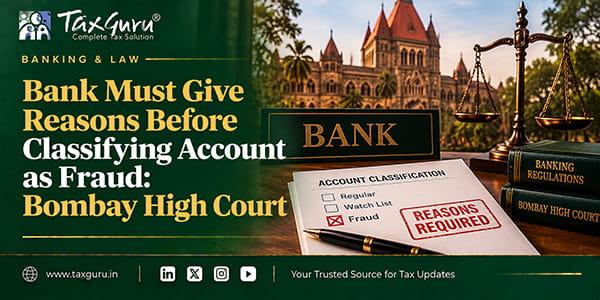
Bank Must Give Reasons Before Classifying Account as Fraud: Bombay High Court

Section 271E Penalty Requires AO Satisfaction in Reassessment Order: Rajasthan HC

GST Penalty Writ Challenge Relegated to Appellate Remedy by Delhi HC

Third-Party Search Material Requires Section 153C, Not Section 148: Gujarat HC

Contractual Payment Dispute With Arbitration Clause Not Entertained in Writ: Calcutta HC

ITC Blocking Without Pre-Decisional Hearing Set Aside: Karnataka HC

Delayed GSTR-3B Filing Withdraws Section 62 GST Assessment: Andhra Pradesh HC

GST Registration Cancellation Set Aside Subject to Filing Pending Returns: Gauhati HC

Rule 96(10) GST Notice Issued After Omission Quashed: Gujarat HC

₹1.5 Crore GST Composition Threshold Effective From 01.04.2019: Madras HC

Kerala HC Quashes Composite GST SCN Covering Multiple Financial Years
GST Refund Interest Under Section 56 Must Be Quantified Within 15 Days: Delhi HC

VCF Trust Registration Covers Separate Schemes for Section 10(23FB): Bombay HC

APA-Settled Transfer Pricing Adjustment Cannot Trigger Section 270A Penalty: Bombay HC
All High Courts brings together judgments and orders of High Courts across India published on TaxGuru. The archive covers Income Tax, GST, Customs, Company Law, Corporate Law, insolvency, commercial laws and other taxation and regulatory matters. Readers can research important questions of law, constitutional challenges, writ petitions, statutory appeals and other proceedings decided by different High Courts. Chartered Accountants, advocates, tax professionals, businesses and legal researchers can use this consolidated archive to follow High Court jurisprudence across India. Separate High Court categories are available for court-specific judgments and orders.

