
Courts: All High Courts
Read latest High Court judgments and orders on Income Tax, GST, Customs, Company Law and other taxation, corporate, commercial and regulatory matters.

AO Can’t Become an Economist to Question Expected Return in Share Valuation: Delhi HC

Uttarakhand HC Quashes GST Order for Denying Mandatory Personal Hearing

Madras HC Allows Section 10(23G) Exemption on Liquidated Damages, Underwriting Commission & Structuring Fees

Allahabad HC Allows VAT Revision, Quashes Penalty for Intra-State Sale Absent Tax-Evasion Intent
Allahabad HC Dismisses Appeals Upholding Interest Tax Reassessment Within Limitation

Chhattisgarh HC Grants Bail in ₹17.18 Crore Fake ITC Case Based on Documentary Evidence
AP HC Allows GST Writ as Section 62 Assessment Deemed Withdrawn on Late Return Filing

Madras HC Rejects Reassessment Appeal for Missing Section 151(ii) Approval

Rajasthan HC Rejects Quashing Plea in Section 276CC Case Over Delayed ITR Filing

Calcutta HC Upholds Discharge of CA in Company Law Case Due to Lack of Mens Rea & Limitation Bar
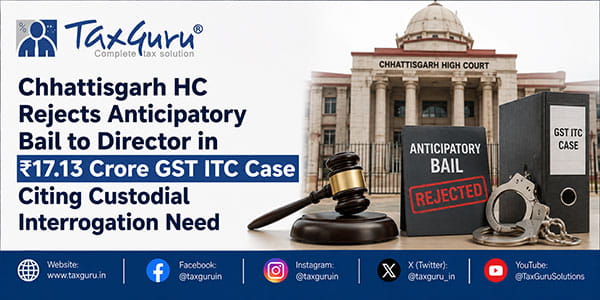
Chhattisgarh HC Rejects Anticipatory Bail to Director in ₹17.13 Crore GST ITC Case Citing Custodial Interrogation Need
Chhattisgarh HC Grants Regular Bail in GST E-Way Bill Manipulation Case Considering Custody, Charge-Sheet & No Antecedents

Gujarat HC Quashes GST Demand Against Deceased Proprietor as Proceedings Were Without Jurisdiction
No CWIP Interest Capitalisation for Existing Building, Gujarat HC Rejects MAT Addition
All High Courts brings together judgments and orders of High Courts across India published on TaxGuru. The archive covers Income Tax, GST, Customs, Company Law, Corporate Law, insolvency, commercial laws and other taxation and regulatory matters. Readers can research important questions of law, constitutional challenges, writ petitions, statutory appeals and other proceedings decided by different High Courts. Chartered Accountants, advocates, tax professionals, businesses and legal researchers can use this consolidated archive to follow High Court jurisprudence across India. Separate High Court categories are available for court-specific judgments and orders.

