

Articles by this Author
Income Tax
Income Tax
Non-Compete Fee Paid to Protect Business is Revenue Expenditure: SC
Income Tax
Income Tax
Higher Depreciation on Goods Vehicles Cannot Be Denied at CPC Stage: ITAT Bangalore
Income Tax
Income Tax
DTAA rate not applicable to Dividend Distribution Tax under section 115O: ITAT Mumbai
Income Tax
Income Tax
DDT Must Follow DTAA Limits Because Dividend Is Shareholder Income: Bombay HC
Income Tax
Income Tax
Delhi HC Upholds Prosecution in ₹348 Crore Tax Evasion Case
Income Tax
Income Tax
Excess FTC Claim Not Underreporting—No Section 270A Penalty: Karnataka HC
Income Tax
Income Tax
Offshore Supply Non-Taxable as No PE Was Proven in India: ITAT Delhi
Income Tax
Income Tax
ITAT Upholds Rule 8D for Sec. 14A Disallowance Due to Unsatisfactory Explanation
Income Tax
Income Tax
ITAT Delhi Quashes Section 68 Addition Due to Lack of Cross-Examination
Income Tax
Income Tax
ITAT Quashes Reassessment for Penny Stock Loss Lacking Direct Nexus
Income Tax
Income Tax
Interest on enhanced compensation taxable as Other Income post Section 56(2)(viii) amendment
Income Tax
Income Tax
ITAT Allows leave encashment benefit u/s 10(10A) for service with Govt undertaking prior to restructuring
Income Tax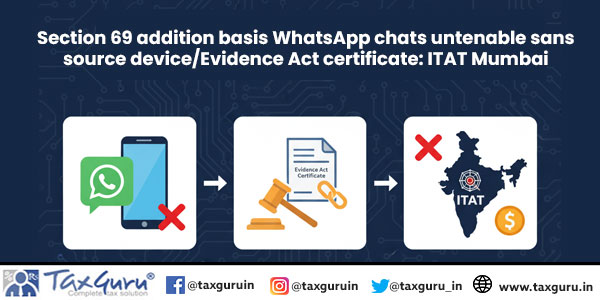
Income Tax
Section 69 addition basis WhatsApp chats untenable sans source device/Evidence Act certificate: ITAT Mumbai
Income Tax
Income Tax

