

Articles by this Author
Income Tax
Income Tax
Chennai ITAT Deletes Section 234E Late Fee for TDS Period Prior to June 2015
Income Tax
Income Tax
Madras High Court Sets Aside Section 234E TDS Late Fee Demands for Pre-June 2015 Period
Goods and Services Tax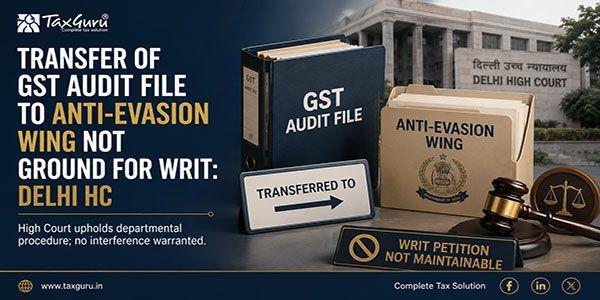
Goods and Services Tax
Transfer of GST Audit File to Anti-Evasion Wing Not Ground for Writ: Delhi HC
Income Tax
Income Tax
SBI Not in Default for Foreign LTC TDS Due to Binding HC Directions: ITAT Rajkot
Income Tax
Income Tax
Section 148A Reassessment Cannot Be Challenged at Preliminary Stage: Telangana HC
Goods and Services Tax
Goods and Services Tax
Contractor’s Differential GST Reimbursement Claim Not Maintainable in Writ: Karnataka HC
Service Tax
Service Tax
Nagar Panchayat Not Liable to Pay Service Tax on Bus Adda Fees: CESTAT Chandigarh
Excise Duty
Excise Duty
Fly Ash Transportation Services Eligible for CENVAT Credit: CESTAT Kolkata
Service Tax
Service Tax
CESTAT Sets Aside Service Tax on Notice Pay Recovery from Employees
Income Tax
Income Tax
Share Premium From Non-Resident Is Capital Receipt, Reassessment Quashed: Telangana HC
Custom Duty
Custom Duty
Customs Order Passed 14 Years After Show Cause Notice Quashed: Madras HC
Custom Duty
Custom Duty
Section 74(10) GST Limitation Starting Point Debatable; Writ Not Entertained: Delhi HC
Company Law
Company Law
Section 98 Cannot Be Invoked Without Proving EGM Is Impracticable: NCLAT Chennai
Goods and Services Tax
Goods and Services Tax

