About
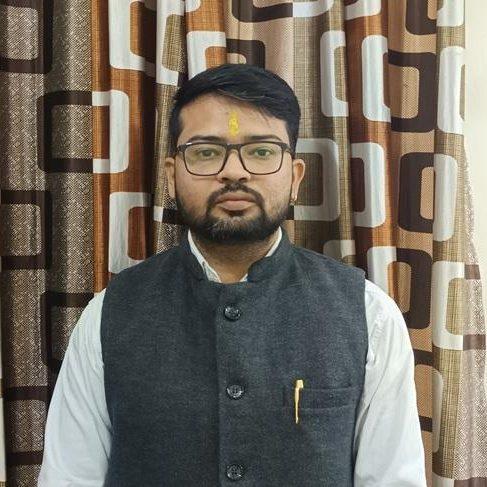
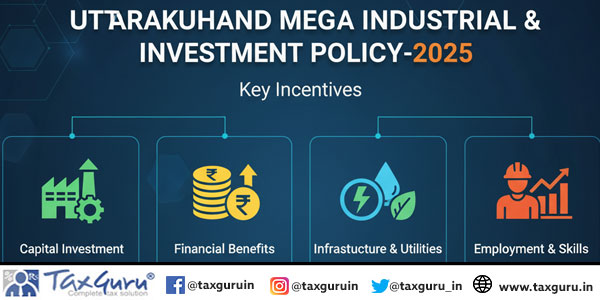
I am the special invitee member of “ICAI The Direct Tax Committee and of The Committee of Accounting Standard of NIRC of ICAI” for FY 2025-26. My article published (Topic: “The Uttarakhand Mega Industrial and Investment Policy-2025: Driving Large-Scale Manufacturing Investment”) on ICAI Knowledge Series on MSME & Startup "ज्ञान सागर" issued by Committee on MSME & Startup, ICAI in the month of October, 2025 Vol. 1 Series 6 page no. 5 to 9 and NIRC E-Newsletter in the month of March, April and May, 2025. My active participation through my Linkedin Post, Instagram Reels and my youtube channel “Chartered Companion” enlightening the stakeholders. I explain and teach on the Subject of Direct Tax Law and related their complex matter, I have delivered lecture on “Overview of Income Tax Act, 2025” at the youtube channel of CA Sansaar.
I am a dedicated tax law researcher with a strong focus on income tax and GST Laws. With extensive experience in legal analysis, policy interpretation and financial compliance, also I am a passionate about exploring the evolving landscape of taxation laws. Navigate complex tax frameworks. I am committed to simplifying tax laws.
Specializing in resolving disputes with tax authorities, I bring a deep understanding of statutory requirements, procedural intricacies, and strategic advocacy to every case.
Dynamic and Goal Oriented person with approx. 14 years of experience in the field of Book Keeping, Statutory Audit, Internal Audit, Concurrent Audit, Bank Audit, Revenue Audit, Compliance Audit, Tax Audit, Insurance Audit, Filing of ITRs, TDS/TCS Returns Filing, Preparation of Financial Statements, Accounting, Statutory Compliance and 5 years’ experience of Punjab VAT, Service Tax & Central Excise and 8 years of experience under GST Laws. I am now exploring MSME growth subsidies schemes that provide fuel to MSME sectors.
I completed my B.Com and M.Com from Panjab University Chandigarh (USOL) Courses.
There after join the prestigious CA and I became a Chartered Accountant after facing lots of hurdles and issues.
My articleship from a Mandi Gobindgarh Based firm.
Qualification: B.Com, M.Com, ACA, ICAI-AICA Level 1, GOI Cyber Security Certified (Ministry of Home)
Topic: Income Tax, GST and MSME new schemes
Youtube
Channel Name: Chartered Companion
Channel Link: https://youtube.com/shorts/00I1966yBAY?si=R-QeWOZU4iyvm7X2
Linkedin Profile: www.linkedin.com/in/ca-p-r-hathwal-5527802b5
Job Experience
Dynamic and Goal Oriented person with approx 10 years of experience in the field of Statutory Audit, Internal Audit, Concurrent Audit, Bank Audit, Revenue Audit, Compliance Audit, Tax Audit, Insurance Audit, Filing of ITRs, Filing of VAT Returns, TDS/TCS Returns Filing, Invest Punjab (State Punjab Investment Policy) & Other States and Union Investment Policies and Preparation of Financial Statements, Accounting, Statutory Compliance and 6 years of experience under GST Laws. Overall 14 Years experience in respective domain.
Job Skills
Experience in the field of Book Keeping, Statutory Audit, Internal Audit, Concurrent Audit, Bank Audit, Revenue Audit, Compliance Audit, Tax Audit, Insurance Audit, Filing of ITRs, TDS/TCS Returns Filing, Preparation of Financial Statements, Accounting, Statutory Compliance and 5 years’ experience of Punjab VAT, Service Tax & Central Excise and 8 years of experience under GST Laws