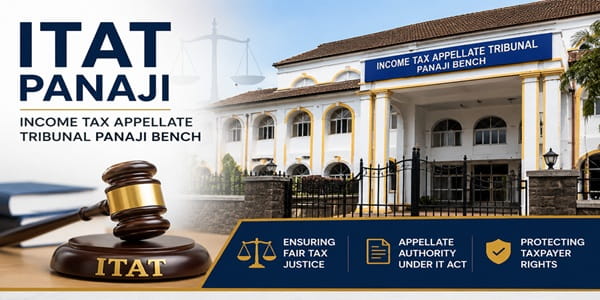
Summary of the Case
This case involves an appeal by ABC against a tax assessment for the year 2014-15. The Assessing Officer (AO) had treated cash deposits worth Rs. 64 lakhs as unexplained income. This was done through a “best judgment assessment,” where the officer estimates income.
Crucially, the assessee had submitted his books of account, but the AO did not formally reject them. Under Section 145(3) of the Income-tax Act, an officer must find the accounts incorrect or incomplete before ignoring them. Legal precedents, such as xyz (P.) Ltd., establish that rejecting books is a mandatory first step before estimating income.
The Tribunal found that the AO failed to identify any specific defects in the records provided. Instead, the officer arbitrarily treated the deposits as taxable without investigating the corresponding books. Because the books of account were not rejected, the addition of Rs. 64 lakhs was ruled legally unsustainable.
The Tribunal subsequently deleted the addition and allowed the assessee’s appeal. A related appeal regarding a penalty was also allowed as a consequence of this decision. Ultimately, the court emphasised that tax authorities cannot “pick and choose” which entries to accept without justification
Issue
Whether cash deposits of ₹64 lakh can be treated as unexplained income and added through best judgment assessment without rejecting books of account under section 145(3) of the Income-tax Act, 1961.
Facts
- The assessee maintained and produced regular books of account for AY 2014-15.
- The Assessing Officer (AO) made a best judgment assessment and treated cash deposits of ₹64 lakh as unexplained income.
- No specific defect, incorrectness, or incompleteness was pointed out in the books.
- The AO did not invoke or record satisfaction under section 145(3) before making the addition.
- Legal Position
- Section 145(3) mandates that books of account must be formally rejected after recording reasons before income can be estimated.
- It is a jurisdictional precondition, not a procedural formality.
- Selective reliance on entries in the books without rejecting them is impermissible in law.
Judicial Precedents
- XYZ (P.) Ltd. – Rejection of books is a mandatory prerequisite for estimation of income.
- Consistent judicial view: No estimation or best judgment assessment can survive without rejection of books.
- Authorities cannot “pick and choose” entries from accepted books.
Tribunal’s Findings
- The AO failed to:
-
- Reject books under section 145(3)
- Identify any specific defects or discrepancies
- Correlate cash deposits with recorded transactions
- The addition was arbitrary and legally unsustainable.
Held
- Addition of ₹64 lakh as unexplained income deleted.
- Since the quantum addition failed, penalty proceedings automatically collapsed.
- Appeal of the assessee allowed in full.
Ratio Decidendi
Without rejecting books of account under section 145(3), the Assessing Officer has no authority to estimate income or treat cash deposits as unexplained. Selective acceptance and rejection of book entries is impermissible.
Practical Tax Planning / Litigation Takeaway
- Always verify whether:
- Books are formally rejected
- Defects are clearly identified
- Estimation is preceded by statutory satisfaction
- In absence of section 145(3) invocation, additions are vulnerable and reversible at appellate stages.
*****
Regards, Research by Prahlad Rajesh & Co. (Chartered Accountants), CA Prahlad R Hathwal, 8054-706-020, [email protected]