Tamil Nadu’s rising debt of around ₹9.6–10.5 lakh crore has sparked widespread debate, but the headline figure alone does not present the full economic picture. The state earns revenue through taxes, fees, and central grants, yet spending has exceeded earnings for most of the last two decades. Since 2003–04, Tamil Nadu has recorded a surplus in only six years, forcing repeated borrowing to fund essential services such as education, healthcare, welfare schemes, transport, pensions, and electricity subsidies. While critics highlight the growing debt burden, Tamil Nadu is not among the highest indebted states in India and reportedly ranks 24th in state debt levels. The article argues that debt itself is not inherently negative if used for productive public investment and human development. However, the persistent pattern of deficits points to the need for stronger fiscal discipline and structural reforms to ensure long-term financial sustainability while maintaining welfare-driven governance.
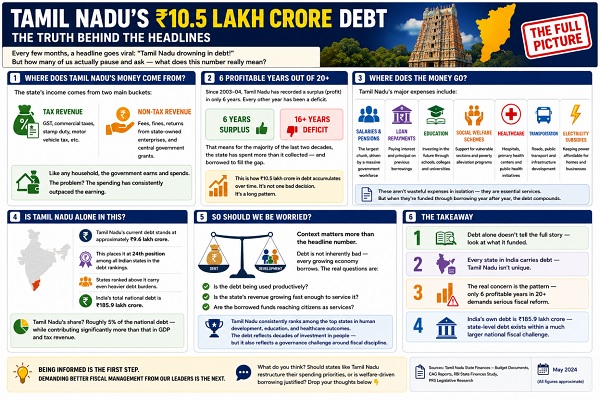
1. Tamil Nadu’s ₹10.5 Lakh Crore Debt — The Truth Behind the Headlines
Every few months, a headline goes viral: “Tamil Nadu drowning in debt!”
But how many of us actually pause and ask — what does this number really mean?
Let’s break it down simply.
2. Where Does Tamil Nadu’s Money Come From?
The state’s income comes from two main buckets:
- Tax Revenue — GST, commercial taxes, stamp duty, motor vehicle tax, etc.
- Non-Tax Revenue — fees, fines, returns from state-owned enterprises, and central government grants.
Like any household, the government earns and spends. The problem? The spending has consistently outpaced the earning.
3. 6 Profitable Years Out of 20:
Here’s a number that doesn’t make headlines but should:
Since 2003–04, Tamil Nadu has recorded a surplus (profit) in only 6 years. Every other year has been a deficit.
That means for the majority of the last two decades, the state has spent more than it collected — and borrowed to fill the gap. This is how ₹10.5 lakh crore in debt accumulates over time. It’s not one bad decision. It’s a long pattern.
4. Where Does the Money Go?
Tamil Nadu’s major expenses include:
- Salaries & Pensions — the largest chunk, driven by a massive government workforce
- Loan Repayments — paying interest and principal on previous borrowings
- Education
- Social Welfare Schemes
- Healthcare
- Transportation
- Electricity subsidies
These aren’t wasteful expenses in isolation — they are essential services. But when they’re funded through borrowing year after year, the debt compounds.
5. Is Tamil Nadu Alone in This?
Not at all.
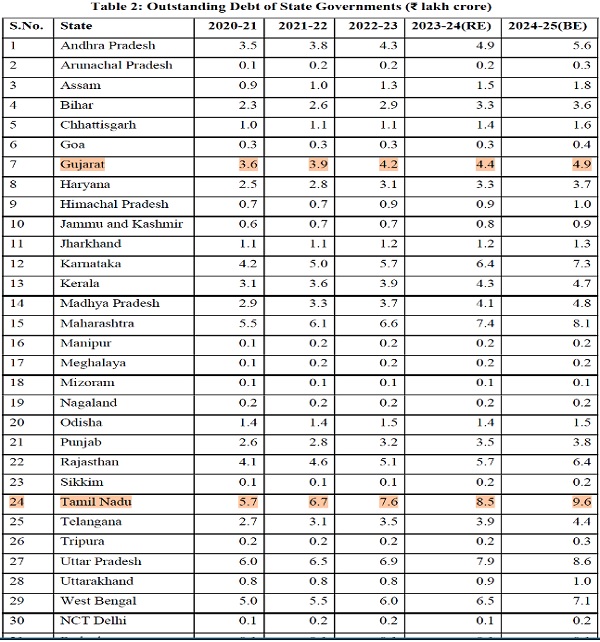
Tamil Nadu’s current debt stands at approximately ₹9.6 lakh crore — which places it at 24th position among all Indian states in the debt rankings.
States ranked above it carry even heavier debt burdens.
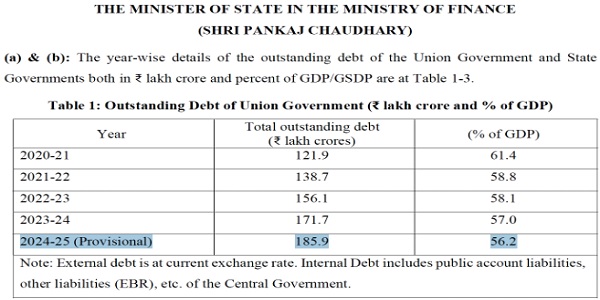
And here’s the bigger picture: India’s total national debt is ₹185.9 lakh crore.
Tamil Nadu’s share? Roughly 5% of the national debt — while contributing significantly more than that in GDP and tax revenue.
6. So Should We Be Worried?
Context matters more than the headline number.
Debt is not inherently bad — every growing economy borrows. The real questions are:
- Is the debt being used productively?
- Is the state’s revenue growing fast enough to service it?
- Are the borrowed funds reaching citizens as services?
Tamil Nadu consistently ranks among the top states in human development, education, and healthcare outcomes. The debt reflects decades of investment in people — but it also reflects a governance challenge around fiscal discipline.
7. The Takeaway
Before sharing the next viral post about Tamil Nadu’s debt:
1. Debt alone doesn’t tell the full story — look at what it funded.
2. Every state in India carries debt — Tamil Nadu isn’t unique.
3. The real concern is the pattern — only 6 profitable years in 20+ demands serious fiscal reform.
4. India’s own debt is ₹185.9 lakh crore — state-level debt exists within a much larger national fiscal challenge.
Being informed is the first step. Demanding better fiscal management from our leaders is the next.
What do you think? Should states like Tamil Nadu restructure their spending priorities, or is welfare-driven borrowing justified? Drop your thoughts below
#TamilNadu #PublicFinance #IndiaEconomy #FiscalPolicy #StateFinances #LinkedInLearning
See content credentials
Tamilnadu in 24th place in State debt list