
Type: Featured
10,042 articlesIncome Tax
Income Tax
Delhi HC Slams Arbitrary Income Tax Reopening, ₹1 Lakh Cost per Case
Goods and Services Tax
Goods and Services Tax
GSTAT Orders Lenient Scrutiny of Appeals Filed on New Portal
Corporate Law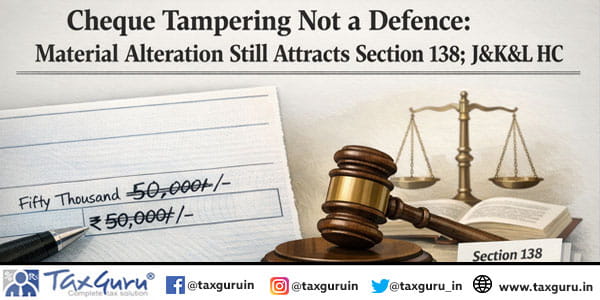
Corporate Law
Cheque Tampering Not a Defence: Material Alteration Still Attracts Section 138; J&K&L HC
Goods and Services Tax
Goods and Services Tax
Can Penalty be Levied on Delayed Annual GST Return?
Goods and Services Tax
Goods and Services Tax
Excess Stock ≠ Confiscation: SC Settles GST Section 130 Misuse Debate
Income Tax
Income Tax
ITAT Delhi Quashed Cash Addition for Invalid WhatsApp Digital Evidence
Income Tax
Income Tax
ITAT Kolkata Allowed ₹26.77 Section 54F Exemption Despite Joint Ownership
Income Tax
Income Tax
ITAT Mumbai Allows Section 54 Exemption on Sale of Inherited Flat as LTCG
Income Tax
Income Tax
Loose Sheet Found from Third Party Cannot Justify Section 69C Addition: ITAT Delhi
Corporate Law
Corporate Law
Advocate’s Office Not a Commercial Establishment for Electricity Tariff: Karnataka HC
Income Tax
Income Tax
Accommodation Entry Case: Reassessment Beyond 3 Years Invalid Without Proper Sanction
Company Law
Company Law
Penalty Upheld for Failure to Maintain Board & AGM Minutes despite Flood damage
Corporate Law
Corporate Law
CIRP Not a Ground to Demand Documents During CBI Investigation: Delhi HC
Company Law
Company Law

