The scheme allows companies to clear pending filings by paying only 10% of additional fees. It offers a limited-time relief to reduce compliance burden and avoid penalties.
The new tax framework significantly reduces complexity by cutting sections, rules, and forms. It improves readability through structured drafting and modern presentation.
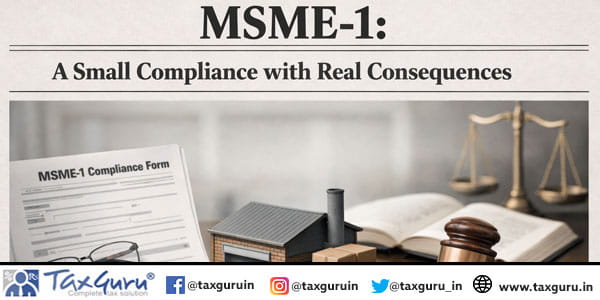
Recent ROC orders confirm that failure to file MSME Form 1 is no longer treated as a minor lapse. Non-filing leads to adjudication proceedings, with penalties imposed on both companies and directors.
RBI plans to ease registration norms for low-risk NBFCs to reduce compliance burden. The move aims to encourage innovation while maintaining financial stability through targeted regulation.
The Supreme Court has allowed taxpayers to challenge retrospective amendments validating JAO reassessment actions. It stayed ongoing proceedings while keeping all constitutional issues open.
The Tribunal held that the Indian entity was only a distributor and not a technology or content owner. It rejected the Revenue’s attempt to recharacterise the business and apply royalty-based valuation.
The Tribunal held that penalty under Section 271(1)(c) cannot be imposed when additions are made on an estimated basis. It upheld deletion of penalty, emphasizing absence of concrete evidence of concealment.
The Tribunal clarified that filing of original return is not mandatory for claiming exemption under Section 54. It directed verification of conditions and allowed relief if eligibility is established.
The case examined whether a partnership can shield unlawful sub-letting. The Supreme Court held that where possession is effectively transferred to third parties, courts can lift the veil and treat it as sub-letting. The ruling reinforces that substance prevails over form in tenancy disputes.
The case clarifies that MSME-1 filing is triggered when payments to MSME suppliers exceed the 45-day limit. It emphasizes that even a single delay requires disclosure of outstanding dues and reasons.