
#Section 250
Log in to FollowLatest Section 250 updates, provisions, case laws, compliance requirements, tax implications and expert analysis under Income-tax law on TaxGuru.
Income Tax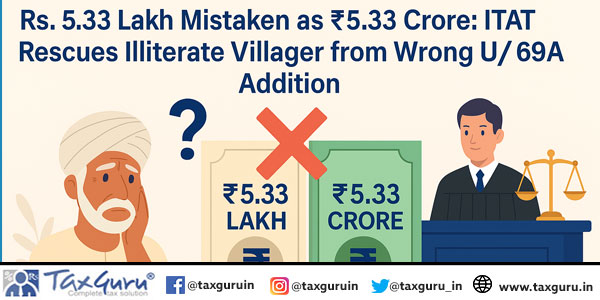
Income Tax
Rs. 5.33 Lakh Mistaken as ₹5.33 Crore: ITAT Rescues Illiterate Villager from Wrong U/s 69A Addition
Income Tax
Income Tax
Cash Rebate Allegation of ₹9.06 Cr: Tribunal Rejects 7.5% Theory for Lack of Proof
Income Tax
Income Tax
Documentary Trail Wins- Suspicion Cannot Replace Evidence: Penny-Stock Addition Deleted
Income Tax
Income Tax
Technical Glitch Not Fatal – ITAT Allows 115BAA Despite Late Form 10-IC
Income Tax
Income Tax
Addition u/s. 68 towards cash deposit during demonetization unwarranted as genuineness of cash sales proved
Income Tax
Income Tax
HUF Gift to Member: Why It Should Be Treated as Exempt Under Section 10(2)?
Income Tax
Income Tax
Temporary Factory Letting Doesn’t End Business: ITAT Holds User Charges as Business Income
Income Tax
Income Tax
Deduction Denial Reversed for Failure to Route Provision Through P&L
Income Tax
Income Tax
15% ‘Misdirected’ Discount on NAV Shares, Rs. 8.70 Cr Addition Deleted
Income Tax
Income Tax
Reassessment Quashed for Being Passed on a Struck-Off Company
Income Tax
Income Tax
Notional Turnover ≠ Real Income: ITAT Sends F&O Estimate Back for Fresh Look
Income Tax
Income Tax
ITAT Allows Section 54 Deduction despite Registration Delay as Payments Made in Time
Income Tax
Income Tax
Penalty u/s. 271(1)(c) quashed as additional income was voluntarily disclosed and not based on seized material
Income Tax
Income Tax
No Fresh Material, No Reassessment: ITAT Quashes Section 148 Notice
Explore the latest Section 250 updates on TaxGuru, including relevant Income-tax Act provisions, rules, notifications, circulars, judicial decisions and compliance guidance. The coverage highlights important tax positions, procedural requirements, assessments, deductions, penalties and litigation developments to help taxpayers and professionals understand the practical implications of changes in income-tax law.

